Callaway or TaylorMade? For most golfers, the better club is the one that fits your delivery and gives tighter misses, not the one with the louder Tour campaign. If you want one practical starting point, I would try Callaway first for a mixed-handicap bag, then test TaylorMade alongside it—especially the Qi35 Max driver if keeping tee shots in play is your biggest problem. Do not buy an entire matching set before hitting both.
Contents
- Direct answer
- Callaway vs TaylorMade at a glance
- Drivers
- Irons
- Putters
- How to choose and get fitted
- The verdict
- Frequently Asked Questions
Callaway vs TaylorMade: the direct answer
Neither brand is better across every part of the bag. Callaway is a useful first stop if you value a conventional-feeling driver and iron set, with Odyssey adding a broad putter choice. TaylorMade is compelling if a high-MOI driver shape or the Spider mallet suits your eye. The strongest comparison is club against equivalent club, with the same loft, shaft flex, length and set makeup—not two brand names on a receipt.
The six current examples below are specific right-handed variants, not interchangeable versions of their model families. Check your handedness, shaft, loft and the contents of an iron set before ordering. The Callaway and TaylorMade sites are useful for the manufacturers’ fitting and specification information.
Callaway vs TaylorMade at a glance
| Category | Callaway example | TaylorMade example | What matters |
|---|---|---|---|
| Driver | Elyte, 10.5°, regular, right hand | Qi35 Max, 10.5°, regular, right hand | Compare carry, dispersion and strike location |
| Irons | Elyte, 6–PW, regular steel, right hand | Qi, 5–PW + AW, regular steel, right hand | Set makeup differs: price per club is not comparable |
| Putter | Odyssey Ai-One Cruiser Jailbird, 38in counterbalanced | Spider Tour Black #3, 34in | Different lengths and balance; try both in person |
These are shopping examples, not test results or a claim that the two putters or iron bundles are equivalent. Decide the club category you need first, then compare the exact configuration. A cheaper bundle can include fewer clubs, and a putter with a longer counterbalanced shaft changes the stroke feel.
Drivers: forgiveness versus fit
Both brands make adjustable drivers, but the fit of the head and shaft matters more than the badge. The two examples here share a 10.5° loft, regular flex and right-handed build, making them a more useful starting comparison than a 9° stiff model against a draw-biased senior club.
Callaway Elyte driver
The Elyte example is a 10.5° right-handed driver with a regular-flex Denali Charcoal 50 g shaft. That is a specific configuration; the wider Elyte family contains other lofts and shafts.

Choose it if: you want to compare a regular-flex Callaway driver against a similarly specified rival.
Skip it if: you need left-handed, stiff-flex or a different loft without a fitting.
Main trade-off: This is the standard Elyte, not the more forgiving-looking Elyte X or lightweight Max Fast.
TaylorMade Qi35 Max driver
This Qi35 Max uses a 10.5° head and regular-flex AirSpeeder shaft. TaylorMade positions the Max head around high stability and launch; that is a design claim, not proof that it will tighten your dispersion.

Choose it if: your priority is testing a high-MOI head against a standard driver on the same launch monitor.
Skip it if: a larger head profile feels distracting or the stock AirSpeeder shaft does not suit your tempo.
Main trade-off: The Max head and standard Elyte are not identical design briefs; a fitting should settle the comparison.

Irons: compare the whole set, not the badge
Iron comparisons are easily distorted by stronger lofts and different set compositions. One club travelling farther is not automatically the better iron if the distance gaps or stopping power suffer. If you are new to the categories, our blade, cavity-back and game-improvement guide explains what the head shapes are trying to do.
Callaway Elyte irons
This exact Elyte set is 6-iron through pitching wedge in right-handed regular-flex steel. It is a five-club set, so budget separately for any gap wedge or longer iron you need.

Choose it if: you want to build a bag around mid and short irons and choose the remaining lofts yourself.
Skip it if: you assume a gap wedge or 5-iron is included.
Main trade-off: The smaller set composition makes headline bundle comparisons misleading.
TaylorMade Qi irons
The Qi listing specifies 5-iron through pitching wedge plus an approach wedge, regular steel and right-handed. It covers more lofts than the Elyte example, so compare the final bag cost and distance gaps rather than just the ticket price.

Choose it if: you want a seven-club iron bundle covering longer approach shots and an approach wedge.
Skip it if: you prefer to select your own long iron or gap wedge after a fitting.
Main trade-off: More included clubs may be useful, but only if their lofts fit your gapping.
A fitting should compare carry distance, launch, descent angle, strike pattern and left-right spread across several shots. If you are replacing a mixed bag, take your current 7-iron with you. Our shaft-flex guide explains why the same “regular” label does not make two shafts identical.
Putters: Odyssey versus Spider
Odyssey is Callaway’s putter brand. Here the exact products are deliberately different: a 38-inch counterbalanced Jailbird and a 34-inch Spider Tour. They show the range of the two families, but they are not a fair head-to-head test of brand performance. Aim, start line and pace control decide this category.
Odyssey Ai-One Cruiser Jailbird
The Ai-One Cruiser Jailbird is a right-handed, 38-inch counterbalanced putter with a double-bend neck. Its longer build changes hand position and balance compared with a conventional-length putter.
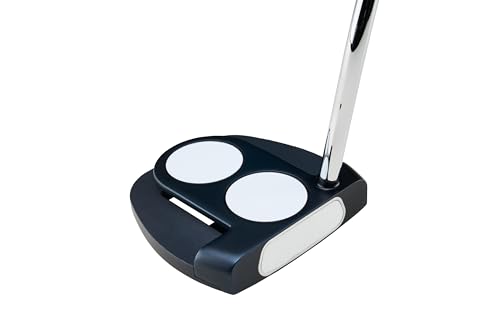
Choose it if: a longer counterbalanced mallet helps you make a repeatable stroke when tried in person.
Skip it if: you expect a standard-length putter or prefer a compact blade.
Main trade-off: The 38-inch build is a fitting choice, not a universal upgrade.
TaylorMade Spider Tour Black
The Spider Tour Black #3 here is a right-handed 34-inch mallet. Its high-contrast shape and alignment aid may suit golfers who like a clear visual line at address.

Choose it if: you prefer a conventional 34-inch mallet and its alignment picture works for you.
Skip it if: your stance needs another length or the mallet shape distracts you.
Main trade-off: Alignment aids are personal; they do not correct a poor read or pace control.

How to choose and get fitted
Start with the part of your bag that costs you shots. If your tee shots are the problem, test drivers before replacing irons. If approach shots are inconsistent, compare iron gapping and strike quality. If you miss short putts, putters deserve time on a real green. For a complete first bag, our beginner-club guide is a better starting point than buying six premium clubs piecemeal.
- Match the setup: keep loft, shaft weight, flex and length as similar as possible for a useful driver comparison.
- Check every club in an iron bundle: count the irons and wedges, then compare loft gaps; a 6–PW set is not the same purchase as 5–PW plus AW.
- Keep your own numbers: record carry, dispersion and mishit behaviour over several shots, not one best strike.
- Try putters at playing length: a 38-inch counterbalanced putter needs a different setup from a 34-inch mallet.
Wedges are another separate fitting decision. Bounce and sole grind change how a wedge meets UK turf and sand; our wedge bounce and grind guide is more useful than choosing one solely because its logo matches your irons. The same principle applies to balls: see our Pro V1 versus Pro V1x comparison before assuming a Tour favourite suits your flight.
The verdict
If I had to choose a brand to test first for a typical recreational golfer, it would be Callaway: the Elyte driver and irons give a clear baseline, and Odyssey offers a distinct putter feel. TaylorMade could win the fitting—especially if the Qi35 Max’s shape and launch suit your tee game or a Spider helps your aim. The biggest mistake is treating a brand-wide verdict as a substitute for matching loft, shaft, set makeup and putter length.
Do not mistake product availability for suitability. Check the exact configuration, delivery estimate and seller terms before ordering, then compare it with a fitting quote from a UK golf retailer.
Frequently Asked Questions
Is Callaway or TaylorMade better for high handicappers? Neither logo guarantees forgiveness. Try game-improvement heads from both brands with suitable shafts and compare the pattern of your misses, not only your longest shot.
Which brand makes the better driver? Test equivalent loft and shaft configurations. The Qi35 Max is built around a high-stability head, while the standard Elyte is a different design brief; your own dispersion and launch decide.
Are Callaway or TaylorMade irons better value? Compare the number of clubs, their lofts and the final fitted cost. The Elyte example here is 6–PW; the Qi example is 5–PW plus an approach wedge.
Is Odyssey part of Callaway? Yes. Odyssey is Callaway’s putter brand, so an Odyssey-versus-Spider comparison is part of the wider Callaway-versus-TaylorMade decision.
Should I buy all my clubs from one brand? No. A mixed bag can fit you better. Choose the driver, irons, wedges and putter on their own merits and check that distance gaps work across the bag.
Do I need a fitting before buying? It is especially worthwhile for expensive drivers and iron sets. Even a basic fitting can flag unsuitable shaft, length and lie choices before you spend.