Buying second-hand golf clubs is usually sensible if you know what to inspect and what a fair UK price looks like. The risk is not that used clubs are bad; it is paying £320 for a tired iron set with worn grooves, wrong shafts and grips that need another £90 spent before your first round. This buy second hand golf clubs guide focuses on the checks that actually protect your money.
In This Article
- Quick Verdict: Buy Second Hand Golf Clubs Guide
- Match the Club to Your Game Before You Search
- Check Condition: Heads, Faces, Shafts and Grips
- Buying by Club Type: Driver, Irons, Wedges and Putter
- Prices, Sellers and Return Policies in the UK
- Red Flags That Should Make You Walk Away
- A Simple Inspection Checklist Before You Pay
- Frequently Asked Questions
Quick Verdict: Buy Second Hand Golf Clubs Guide
The best second-hand golf clubs to buy are usually irons, hybrids, fairway woods and putters from the last five to eight years. They lose value quickly when new models launch, but the performance difference for most club golfers is often tiny. A £280 used iron set from Ping, Callaway, TaylorMade, Mizuno or Cobra can be a far better buy than a new no-name package set at a similar price.
Drivers are worth buying used too, but only if the head is sound, the shaft suits you and the adjustable hosel is not damaged. Wedges need more caution because grooves wear down. A second-hand 56-degree wedge at £45 can be fine for casual golf, but a heavily used one is a poor buy if you rely on spin around the green.
If I were using this as a buy second hand golf clubs guide for a sensible first upgrade, I would spend the money in this order:
- Used irons first: budget £180-£450 for a forgiving 5-PW or 6-PW set from a known brand.
- A recent used driver: budget £120-£260 for a model from the last three to six years, not a battered current-year head with a mystery shaft.
- A dependable putter: budget £40-£150; condition matters less than whether you like the shape and alignment.
- Fresh or lightly used wedges: budget £45-£90 each used, or £80-£140 new if the faces on used options look tired.
The clubs I would be most careful with are ultra-cheap full sets on Facebook Marketplace. Some are fine. Plenty are a mix of odd shafts, old lofts, slick grips and one missing seven iron. That bargain can stop looking clever once you start replacing bits.
For the rules side, remember that clubs must conform to the Rules of Golf. The R&A explains the purpose of the Equipment Rules, and the USGA/R&A equipment database is useful if you are checking an unusual driver head or old competition club.
Match the Club to Your Game Before You Search
Second-hand shopping goes wrong when you search by brand instead of fit. A used set of beautiful forged blades is still a bad idea if you need help launching the ball. A bargain extra-stiff driver is not a bargain if your swing speed suits regular flex. Start with what you need, then shop within that lane.
Handicap and strike pattern matter more than ego
Most improving golfers are better served by forgiving cavity-back irons, hybrids instead of long irons, and a driver with enough loft. If your miss is low and right, a low-lofted driver with a stiff shaft is unlikely to rescue you. If your strike wanders across the face, game-improvement irons make more sense than compact players’ irons.
Use the site’s existing guide to choosing the right golf clubs as your starting point if you are not sure what style of club belongs in your bag. Then come back to the second-hand market with a narrower search.
Shaft flex is the easy mistake
Shaft flex is not a badge of honour. Regular, stiff and senior labels vary by brand, but they still give you a useful filter. A regular-flex graphite shaft in a forgiving hybrid may help a steady 18-handicapper far more than a tour-style stiff shaft bought because it looked serious.
The safe approach is:
- Slower tempo or lower speed: look at senior, light regular or regular shafts.
- Average club golfer: regular or firm regular is often the place to start.
- Fast transition or strong ball flight: stiff may suit, but test it before spending proper money.
If you want the detail, read the site’s golf shaft flex explainer before you buy. The wrong shaft can make a good club feel terrible.
Check set make-up, not just the headline
Second-hand iron sets are often listed as 4-PW, 5-PW, 6-PW, 5-SW or something messier. Modern lofts are stronger than older lofts, so a pitching wedge in one set may be closer to a nine iron in another. You do not need to obsess over this, but you do need to know what gaps you are creating.
For many UK golfers, a practical used setup looks like driver, 5-wood or 7-wood, 4-hybrid, 5-PW irons, 50/54/58 wedges or 52/56 wedges, and a putter. Beginners can keep it simpler. The site has a separate guide on what clubs a beginner should carry if you are trying not to overfill the bag.
Check Condition: Heads, Faces, Shafts and Grips
Condition is where the money is. Cosmetic marks are normal. Structural damage, loose heads and dead grips are not. I would rather buy a plain-looking used club with a clean face and original shaft than a shiny club with suspicious paint touch-ups and no return option.
Club heads and faces
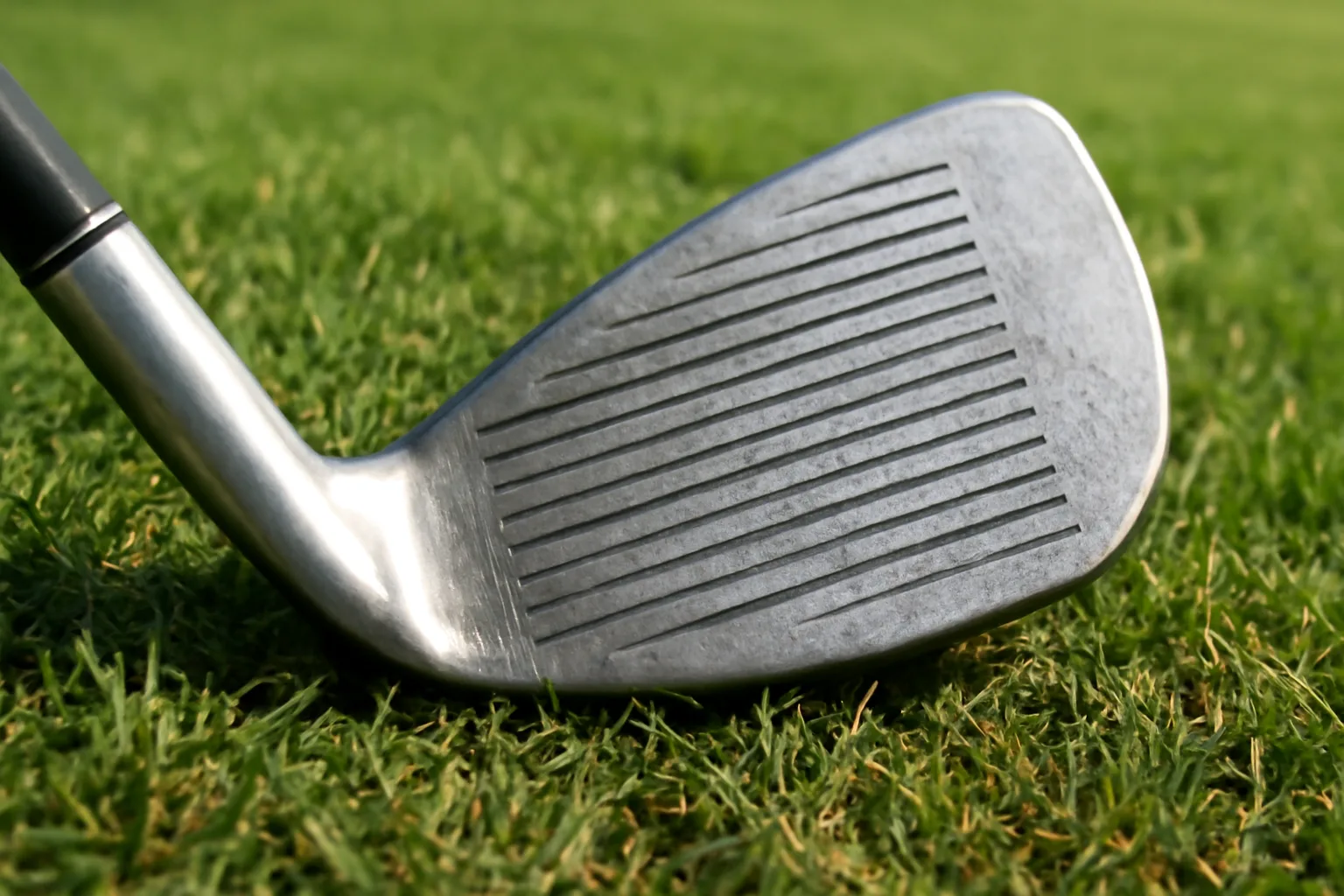
On irons, look closely at the hitting area. Light bag chatter on the back of the head is harmless. Deep face wear, flattened grooves, browning in the centre and dents on the leading edge are more serious. A little chrome wear on an older forged iron is not automatically a failure, but it should lower the price.
On drivers and fairway woods, inspect the crown, face and sole. Sky marks on the crown are cosmetic unless they hide cracks. Dents on the sole or crown are more worrying. Check the face for hairline cracks, especially near the edges and around any speed-slot style design. If the seller’s photos avoid the face, ask for better ones.
Shafts and ferrules
Roll the shaft gently on a flat surface if you can. A bend is a hard no. Check for splintering on graphite shafts and rust pitting on steel shafts. Surface marks are fine; cracks, dents and crushed areas are not.
The ferrule is the small black collar where the shaft enters the head. A tiny gap can be cosmetic, but a loose head or clicking sound is not. Hold the grip and twist the head gently. Nothing should move. If it does, walk away unless you are deliberately buying a repair project.
Grips and hidden replacement costs
Grips are easy to ignore because they look cheap. They are not cheap across a full set. A single Golf Pride, Lamkin or SuperStroke grip is often about £8-£18 in the UK, plus fitting if you do not do it yourself. Regripping a full iron set can quickly add £70-£130.
Shiny, hard, cracked or twisted grips should come straight off your offer price. I do not mind buying clubs that need grips if the seller has priced them accordingly. I do mind paying “excellent condition” money for clubs that feel like polished plastic.
Adjustability and missing parts
Many modern drivers, fairway woods and hybrids have adjustable sleeves and movable weights. Check that the shaft adapter matches the head, the settings are readable and the screw has not been chewed up. Ask whether the tool is included, though you can buy torque wrenches for around £8-£15 from Amazon UK or golf retailers.
The R&A’s conformance rules for clubs cover adjustability, including the need for adjustable parts to be firmly fixed. For ordinary buyers, the practical version is simple: if anything rattles, shifts or looks bodged, leave it.
Buying by Club Type: Driver, Irons, Wedges and Putter
Different clubs age differently. Do not use one condition standard across the whole bag. A scuffed putter can work perfectly for years. A wedge with worn grooves is just an expensive piece of metal.
Used drivers and fairway woods
A used driver is often the best way to get premium technology without paying £499 for the latest release. Older models such as the Ping G400/G410/G425, TaylorMade SIM/Stealth, Callaway Rogue/Epic/Paradym and Cobra LTDx/Aerojet can all be good buys if the condition and shaft suit you.
Typical UK used prices:
- Older forgiving driver: £90-£160 for models roughly six to nine years old.
- Recent premium driver: £170-£300 depending on condition and shaft.
- Fairway wood or hybrid: £55-£180, with hybrids often offering better value than matching long irons.
Do not overpay for a head with a premium aftermarket shaft unless you know it suits you. A £250 driver with the wrong shaft is worse value than a £150 driver you can actually launch.
Used iron sets
Iron sets are where used buying really shines. The sweet spot is a forgiving set from a known brand, in decent condition, with consistent shafts and no missing club in the middle. Ping G series, Callaway Apex or Rogue, TaylorMade M/Stealth game-improvement irons, Mizuno JPX and Cobra King models are all worth considering.
Expect to pay roughly:
- Older game-improvement set: £160-£280.
- Good mid-range set: £280-£500.
- Recent premium set: £500-£800, which starts to overlap with new sale pricing.
If you are choosing between a modern used set and a cheap new package set, I would usually buy the modern used set. You get better shafts, better heads and better resale value. The exception is a complete beginner who wants one simple boxed set and no decision fatigue; the site’s beginner golf club set guide covers that route.
Used wedges
Be fussy with wedges. Grooves and face texture are the point. If the face looks shiny and smooth in the strike area, it may still get the ball airborne, but it will not give you the same grip from wet grass or partial shots.
Lightly used Cleveland, Titleist Vokey, Callaway Jaws, TaylorMade MG and Ping Glide wedges often sit around £45-£95. New previous-season wedges can sometimes be found for £80-£120 from American Golf, Scottsdale Golf or Clubhouse Golf, so do not pay £75 for a wedge that is already worn out.
Used putters
Putters age well because they are not taking high-speed impacts. Condition is mostly about the face insert, shaft straightness and whether the head sits square. A used Odyssey, Ping, TaylorMade Spider, Cleveland or Scotty Cameron can make sense, but the premium names hold value hard.
For most golfers, a £60-£120 used Odyssey or Ping is better value than chasing a £250 collectible putter. Try to match head shape to your stroke: mallets often help alignment and stability, while blades suit players who like a cleaner look. The site’s blade vs mallet putter guide goes deeper on that choice.
Prices, Sellers and Return Policies in the UK
There are four main UK routes: specialist used-club retailers, golf-shop trade-in sections, eBay, and local marketplaces. The cheapest option is not always the best one. Return rights, grading and honest photos are worth paying for, especially if you cannot inspect the club in person.
Specialist used-club retailers
Golfbidder is the obvious UK name for second-hand clubs, and it is useful because stock is graded and searchable by brand, shaft, loft and condition. At the time of writing, Golfbidder promotes categories such as drivers under £200, wedges under £100 and iron sets under £500, which are sensible benchmark ranges rather than automatic bargains.
The advantage is confidence. You usually pay more than a private sale, but the club has been checked and you have a clearer route if something is wrong. For a first used purchase, that is worth a lot.
Golf shops and pro shops
American Golf, Clubhouse Golf, Scottsdale Golf and local pro shops can all have trade-in or sale stock. The benefit is being able to hold the club, check the shaft label, look down at address and compare it against your current club. Some shops will also let you hit it on a launch monitor.
If a shop charges £30-£50 for a fitting session and then credits it against a purchase, that can be money well spent. Guessing wrong on a £350 iron set costs more.
eBay and Facebook Marketplace
Private marketplaces can be excellent if you know what you are looking at. They can also be full of vague listings: “golf clubs, good condition, no offers” with three blurry photos. Ask for face, sole, shaft-label, grip and serial-number photos. For drivers and woods, ask for a close-up of the crown and hosel.
My rule is simple: if the price is only £20 cheaper than a graded retailer, buy from the retailer. Use private sales when the saving is meaningful or when you can inspect locally before paying.
Delivery and hidden extras
Postage on clubs is not trivial. A single club may add £8-£15; an iron set can cost £15-£25 to ship. Add that to your price comparison. Also budget for:
- New grips: £70-£130 for a full set if they are slick or cracked.
- Loft and lie check: often £30-£60 depending on the shop and number of clubs.
- Headcover replacement: £10-£30 for a driver, fairway or putter if missing.
That £220 set can easily become £350 if it needs grips, a lie check and missing accessories.
Red Flags That Should Make You Walk Away
Some used-club flaws are manageable. Others are not worth your time unless the price is basically parts-only. Do not talk yourself into trouble because the brand name looks good.
Hard no signs
Walk away from:
- Cracked driver or fairway head: even a hairline crack can worsen quickly.
- Bent shafts: especially in steel irons or wedges.
- Loose heads: repairable, but not worth full used price.
- Mismatched iron shafts: one replacement shaft in a set can change feel and distance.
- Missing middle irons: a missing seven iron is much worse than a missing four iron.
- Serial numbers removed: no thanks.
Counterfeit clubs are less common than internet forums make them sound, but they do exist. Be wary of current premium drivers at silly prices, especially with stock photos, no proof of purchase and no clear seller history.
The “too good for your game” trap
Another red flag is not damage but suitability. A compact blade iron set at £260 might look like a steal. If you strike the ball all over the face, it is not a steal. It is a punishment plan.
Second-hand golf gear tempts you into clubs you would never buy new. Stay disciplined. Forgiveness, correct shaft and sensible loft gaps matter more than owning a famous model.
Watch for fake urgency
“Collection tonight only” can be genuine. It can also be pressure. If you cannot inspect properly, leave it. There will always be another used TaylorMade driver, another Ping iron set and another Odyssey putter. Golf is not short of second-hand equipment.
A Simple Inspection Checklist Before You Pay
Use this checklist when you are looking at photos or inspecting in person. It is deliberately practical. You do not need a launch monitor to avoid most bad buys.
- Confirm the exact model and loft. Check the badge, sole markings and shaft label against the listing title.
- Inspect the face. Look for cracks, heavy wear, worn grooves, dents or suspicious polishing.
- Check the sole and leading edge. Scratches are normal; deep gouges and bent edges are not.
- Look down at address. Make sure the head shape, offset and alignment suit your eye.
- Check the shaft. Confirm flex, material, length and any signs of bends, dents or splitting.
- Twist the head gently. There should be no movement, clicking or rattling.
- Assess the grips. Deduct realistic regripping cost if they are shiny, hard or cracked.
- Count the set. Make sure every promised club is present and no important club is missing.
- Compare the total price. Include postage, grips, fitting and accessories before calling it a bargain.
If the seller will not answer basic condition questions, move on. A good second-hand purchase should feel boringly clear: right model, right shaft, fair price, no nasty surprises. That is what you are looking for.
Frequently Asked Questions
Is it safe to buy second-hand golf clubs? Yes, if you buy from a reputable seller or inspect the club properly. Used irons, hybrids and putters can be excellent value. Be more careful with worn wedges, cracked woods and unknown private-sale listings.
How much should I spend on used golf clubs in the UK? A sensible used iron set often costs £180-£500, a used driver £90-£300, wedges £45-£95 each and putters £40-£150. Add grip and postage costs before comparing deals.
Are old golf clubs still good? Many are. A forgiving iron set from five to eight years ago can still perform well for club golfers. Very old woods, slick grips and worn wedges are where performance drops more noticeably.
Should beginners buy second-hand clubs? Often, yes. Beginners can get better quality for the money by buying a forgiving used set, but a simple new package set may suit someone who wants everything in one purchase.
What is the biggest mistake when buying used clubs? Buying by brand name instead of fit. The wrong shaft, loft or iron style will hurt your golf even if the club was expensive when new.
Should I get used golf clubs fitted? If you are spending more than about £300, a basic fitting or loft-and-lie check is worth considering. Expect roughly £30-£60 depending on the shop and whether the fee is credited against a purchase.