You’re stood in the pro shop, driver in each hand — a Callaway on the left, a TaylorMade on the right — and you’ve got no idea which one to put back. Both cost a small fortune. Both promise extra yards. Both have Tour pros winning majors with them. So which one actually deserves your money?
It’s the rivalry that splits every clubhouse in the country. Callaway and TaylorMade have been trading blows for decades, each pushing the other to innovate faster, market harder, and chase that extra fraction of ball speed. But strip away the branding and the tech buzzwords, and genuine differences exist between these two giants — differences that matter depending on your game, your budget, and what you’re actually looking for in a set of clubs.
Having spent time with both brands’ current lineups and spoken to club fitters across the UK, here’s how Callaway vs TaylorMade clubs stack up in 2025 and 2026.
A Quick Look at Both Brands
Callaway started life in 1982 in Carlsbad, California, and made its name with oversized clubheads that gave weekend golfers a fighting chance. The Big Bertha line in the early 1990s changed the game for amateurs everywhere. Today, Callaway sits under the Topgolf Callaway Brands umbrella, and they’ve expanded into balls (Chrome Soft), apparel (TravisMathew), and rangefinders.
TaylorMade traces back even further to 1979, and they were the brand that popularised metalwood drivers when everyone else was still swinging persimmon. They’ve been relentless innovators ever since — the adjustable hosel, the twist face, the carbon fibre crown. Rory McIlroy, Scottie Scheffler, and Tommy Fleetwood all carry TaylorMade bags on Tour, which tells you something about the engineering behind the clubs.
Both brands invest heavily in R&D and release new product lines annually. Neither is a budget brand — you’ll pay premium prices for the latest gear from either manufacturer.
Drivers: Where the Arms Race Gets Serious
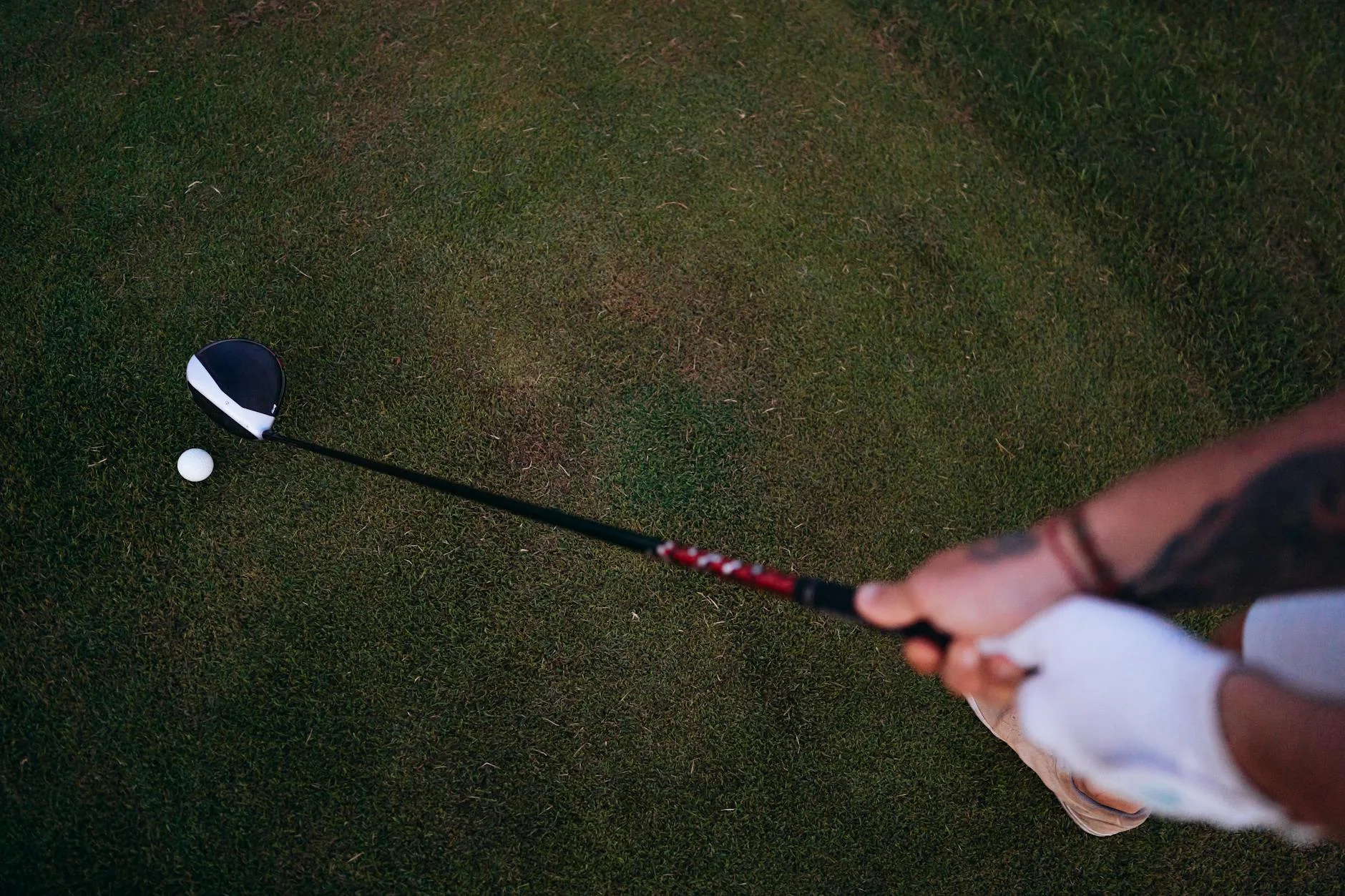
This is where the rivalry burns hottest. Drivers are the flagship product for both companies, and they pour more money into driver development than any other category.
Callaway’s current offering centres on the Ai Smoke family, which uses artificial intelligence to map thousands of face designs and find the one that maximises ball speed across the hitting area. The Ai Smoke Max driver is the most forgiving option, with a high MOI that keeps your misses from turning into disasters. Expect to pay around £500-£550 for the standard model from retailers like American Golf or Scottsdale Golf.
TaylorMade counters with the Qi35 range, built around their Infinity Carbon Chassis — essentially a driver head that’s almost entirely carbon fibre, with a titanium face insert. The Qi35 Max is their forgiveness play, and it’s enormous at 460cc. UK pricing sits around £500-£550 as well, making this a straight fight on value.
In testing, both drivers produce remarkably similar ball speeds for mid-handicap golfers. The difference comes down to feel and sound. Callaway’s Ai Smoke has a slightly muted, solid impact sound that some golfers prefer. TaylorMade’s Qi35 produces a louder, more metallic crack — satisfying if you like hearing your drives, less so if you’re playing early morning and don’t want to wake the neighbours.
For forgiveness, the Qi35 Max has a slight edge thanks to that massive footprint. For workability and the ability to shape shots, the Callaway Ai Smoke offers a bit more control in the hands of a lower-handicap player. If you slice the ball (and most of us do), both brands offer draw-biased models — the Ai Smoke Max D and the Qi35 Max D — that do a decent job of nudging the ball back towards the fairway.
If you’re just getting into the game, our guide to the best golf clubs for beginners covers complete sets from both brands at much friendlier price points.
Irons: Different Philosophies, Both Effective
This is where the two brands diverge most clearly in their design approach.
Callaway leans heavily into AI-designed faces across their iron range. The Paradym Ai Smoke irons use the same machine-learning approach as their drivers, optimising the face pattern for each individual iron in the set. The result is impressively consistent distance gapping — the difference between your 7-iron and 8-iron stays predictable, which matters more than raw distance when you’re trying to hit greens.
Their game-improvement line, the Big Bertha irons, remains one of the most forgiving options on the market. Wide soles, offset hosels, and a low centre of gravity make these dead easy to launch. A set of seven irons (5-PW, AW) runs about £700-£900 depending on the shaft option.
TaylorMade takes a different approach with their P-series irons. The P790 has become something of a modern classic — a hollow-body iron with a forged face that blends the distance of a game-improvement iron with the look and feel of a player’s club. At address, the P790 looks like a proper iron, thin topline and all. But inside, there’s a SpeedFoam insert that boosts ball speed while dampening vibration. It’s clever engineering, and it’s won over a lot of mid-handicap golfers who want performance without the chunky look. Expect to pay £900-£1,100 for a set. For a related angle, see our Wedge Bounce and Grind Explained guide.
For beginners and high-handicappers, TaylorMade’s Stealth HD irons offer similar forgiveness to Callaway’s Big Bertha line, with a slightly more modern aesthetic. They’re priced competitively at around £600-£800 for a set.
The honest assessment: if you care about how your irons look at address — that sleek, compact appearance — TaylorMade’s P790 wins. If you want maximum forgiveness and don’t mind a slightly thicker profile, Callaway’s game-improvement irons are hard to beat. For a deeper look at the different iron types available, check out our guide to blades, cavity backs, and game-improvement irons.
Wedges: Precision Around the Greens
Wedges don’t generate the same marketing hype as drivers, but they’re arguably where you’ll save the most shots. Both brands produce quality short-game clubs, though neither dominates the way Titleist Vokey or Cleveland do in this space.
Callaway’s Jaws Raw wedges feature aggressive face milling and an unmilled face surface that’s designed to grip the ball and generate maximum spin. The raw finish (unplated steel) rusts over time, which actually increases friction and spin — it’s a feature, not a flaw. At around £130-£150 per wedge, they’re competitive with the market leaders.
TaylorMade’s Hi-Toe 3 wedges take a different approach with an expanded face area — the toe is higher than traditional wedges, giving you more hitting surface for open-face shots around the green. They’ve improved spin consistency with their Raw Face design too, and they sit nicely behind the ball at address. Pricing is similar at £130-£150.
If you spend most of your short game hitting full wedge shots from the fairway, either brand will serve you well. But if you like to open the face for flop shots and bunker play, TaylorMade’s Hi-Toe design gives you a genuine advantage — that extra face area is noticeable when you lay the club open. Callaway’s Jaws Raw, on the other hand, edges it for raw spin on standard pitch shots.

Putters: Two Very Different Stables
Both brands have made major moves in the putter market, though they’ve gone about it in completely different ways.
Callaway acquired Odyssey years ago, and it’s become the dominant force in mallet putters. The Odyssey Ai-One range uses the same AI face-mapping technology as their metalwoods, creating a face insert that maintains ball speed consistency whether you catch it on the heel, toe, or sweet spot. The White Hot insert feel is iconic — soft but responsive, with brilliant feedback. Models range from about £200 for a standard Ai-One to £350+ for the Triple Track variants with the alignment aid. Odyssey is the putter brand you’ll find in more amateur bags than any other in the UK.
TaylorMade has the Spider, which became famous when Jason Day used it to dominate the greens. The Spider Tour and the newer SYSTM2 range focus on stability — heavy, high-MOI heads that resist twisting on off-centre strikes. They feel different to Odyssey putters: firmer, more solid, less “clicky.” If you putt with a straight-back-straight-through stroke, the Spider’s stability is hard to argue with. Pricing runs from about £250 for the Spider GT to £350+ for Tour-level models. Our Titleist Pro V1 vs V1x: Which Ball Is Right for You? guide is useful alongside this.
The putter category is where personal preference matters most. I’d recommend trying both on a practice green before spending. The Odyssey’s softer feel suits golfers who like to “feel” the distance; the Spider’s firm response suits those who want mechanical consistency. Neither is objectively better — your stroke type and feel preference will decide this one.
Fairway Woods and Hybrids: Closing the Gap
Both brands produce excellent fairway woods and hybrids, and the gaps between them have narrowed considerably.
Callaway’s Ai Smoke fairway woods are among the easiest to hit off the deck — a lower centre of gravity and the AI face pattern make these remarkably consistent from tight lies. Their hybrids follow the same philosophy: maximum forgiveness, easy launch. A 3-wood will cost you about £270-£300.
TaylorMade’s Qi35 fairways match up well, with carbon construction keeping weight low and the Twist Face technology correcting for the most common miss patterns. Their rescue clubs (TaylorMade’s term for hybrids) have been Tour staples for years. Pricing is comparable at £250-£300 for a fairway wood.
There’s very little to separate these two in the fairway wood and hybrid category. Both launch easily, both forgive mishits, and both cost roughly the same. If you’re already playing one brand’s driver, matching your fairway woods to the same family makes sense for consistent gapping through the bag.
Build Quality and Custom Fitting
Both Callaway and TaylorMade offer extensive custom fitting options through authorised UK retailers. You can get fitted at American Golf, Scottsdale Golf, Foremost Golf, and most well-stocked pro shops across the country.
Callaway’s fitting process uses their OptiFit system for drivers and woods, while TaylorMade relies on their SFNT (Sliding-weight, Face angle, Neck, and Trajectory) system. Both allow you to dial in loft, lie angle, and shaft options to suit your swing.
In terms of build quality, both brands manufacture to high standards. Callaway’s finish quality has improved markedly in recent years — earlier generations sometimes had paint durability issues, but the current lineup holds up well. TaylorMade’s carbon fibre construction gives their clubs a premium look and feel straight out of the box.
One area where TaylorMade has an edge: their pre-owned and “certified refurbished” market is better established in the UK, meaning you can pick up last year’s models at significant discounts. Callaway’s Certified Pre-Owned programme exists too, but TaylorMade’s tends to have wider availability through UK retailers.
Price Comparison Across the Bag
Neither brand is cheap, and pricing is remarkably similar across most categories:
- Drivers — Callaway Ai Smoke: £500-£550; TaylorMade Qi35: £500-£550
- Fairway woods — Both brands: £250-£300
- Irons (game improvement, 7-piece set) — Callaway Big Bertha: £700-£900; TaylorMade Stealth HD: £600-£800
- Irons (players distance, 7-piece set) — Callaway Paradym Ai Smoke: £900-£1,100; TaylorMade P790: £900-£1,100
- Wedges (individual) — Both brands: £130-£150
- Putters — Callaway/Odyssey: £200-£350; TaylorMade Spider: £250-£350
TaylorMade’s entry-level iron sets edge it slightly on value, and their game-improvement options tend to be £50-£100 cheaper than Callaway’s equivalent. For everything else, you’re paying within £20-£30 either way.
Which Brand Should You Choose?
After comparing every category, here’s the honest breakdown:
Choose Callaway if:
- You prioritise forgiveness above all else — their AI-designed faces are exceptional at protecting your bad swings
- You want the best putter brand included (Odyssey is hard to beat for feel and consistency)
- You prefer a softer, more muted sound and feel at impact
- You’re a beginner or high-handicapper looking for maximum help from your equipment
Choose TaylorMade if:
- You care about aesthetics — their irons and metalwoods tend to look sharper at address
- You want the best-looking game-improvement irons on the market (the P790 is in a class of its own)
- You prefer a firmer, more responsive feel through impact
- You value Tour validation — more top-50 players carry TaylorMade than any other brand
- You want access to a strong pre-owned market for last-generation savings
The Verdict
If forced to pick one brand for an entire bag, TaylorMade gets the narrowest of nods — and only because the P790 irons are such a standout product. They manage to combine forgiveness with a look and feel that makes you want to practise, which is half the battle in golf. The Qi35 driver matches Callaway’s best, the Spider putter is rock-solid, and the overall aesthetic across the bag is consistently sharp.
But this is a close call. Callaway’s AI technology is producing some of the most forgiving clubs ever made, and pairing their metalwoods with an Odyssey putter gives you a genuinely complete setup. If you’re newer to the game or your handicap is above 18, Callaway’s forgiveness advantage might matter more to you than TaylorMade’s sleeker look.
The smartest move? Get fitted. A well-fitted Callaway set will outperform an off-the-rack TaylorMade set every time, and vice versa. Understanding how shaft flex affects your game is a good starting point before you book that fitting session.
Both brands make brilliant golf clubs. You won’t go wrong with either. But if your mates ask which you’d put in the bag tomorrow, it’s TaylorMade — by a whisker.
Frequently Asked Questions
How do I know if golf clubs fit me? Check length, lie angle, shaft flex and how consistently you strike the ball. A basic fitting is worthwhile once your swing is repeatable.
Should beginners get fitted for clubs? A full premium fitting is not essential on day one, but beginners still benefit from clubs with suitable length, flex and forgiveness.
Is expensive golf equipment worth it? It helps only when it solves a real fit or performance problem. Lessons and practice usually beat premium gear for newer players.
What should I check first with Callaway vs TaylorMade: Which Brand Makes Better Clubs?? Start with the real use case, then check size, compatibility, running costs and maintenance. A product that looks good on paper can still be the wrong fit if it does not suit the room, routine or budget.
How do I avoid wasting money on Callaway vs TaylorMade: Which Brand Makes Better Clubs?? Avoid buying on one headline feature alone. Compare the practical details, read the warranty or returns terms, and choose the option that solves your main problem rather than the one with the longest specification list.