Your mate at work just told you golf isn’t a real sport. He reckons it’s an excuse to walk slowly across a field, hit a ball occasionally, and drink in the clubhouse afterwards. You know he’s wrong, but you can’t quite explain why you’re knackered after 18 holes despite never breaking into a run. Here’s the thing — golf is properly decent exercise, and the science backs it up. It just doesn’t look like exercise, which is part of what makes it brilliant for people who hate the gym.
In This Article
- The Headline Numbers: Calories and Distance
- Walking: The Hidden Workout
- The Golf Swing as Exercise
- Cardiovascular Benefits
- Mental Health and Stress Reduction
- Golf vs Other Activities: A Fair Comparison
- Who Benefits Most from Golf as Exercise
- How to Maximise the Fitness Benefits
- The Limits of Golf as Exercise
- What the Research Says
- Frequently Asked Questions
The Headline Numbers: Calories and Distance
Let’s start with what most people want to know: does golf actually burn a decent number of calories?
Calories Burned Per Round
A typical 18-hole round burns roughly 1,200-2,000 calories if you walk the course and carry your bag. That’s the equivalent of running about 12-15 km. Even with a trolley (push or electric), you’re looking at 800-1,400 calories over 4-5 hours.
How the Method Changes Things
- Walking + carrying bag — 1,200-2,000 calories per round
- Walking + push trolley — 800-1,400 calories per round
- Walking + electric trolley — 700-1,200 calories per round
- Riding a buggy — 400-800 calories per round
The difference between carrying and riding a buggy is enormous. A buggy essentially removes the walking component, which is where most of the calorie burn comes from. If fitness is a goal, leave the buggy in the car park. A push or electric trolley is the middle ground — you walk the full distance but without the weight on your shoulders.
Distance Covered
An average 18-hole course is about 6-8 km from tee to green as the ball flies. But you don’t walk in straight lines — factoring in walks between holes, to the tee box, finding your ball (we’ve all been there), and back to the green, most golfers cover 8-12 km per round. That’s a proper walk by any measure.
Walking: The Hidden Workout
This is where golf’s fitness credentials really show up. You’re walking for 4-5 hours across varied terrain, and your body barely registers it as exercise because you’re focused on the game.
Low-Impact Cardio
Walking on a golf course is gentler on joints than running or team sports. The grass surface absorbs impact. The pace is moderate — roughly 4-5 km/h with regular stops. For anyone over 50, recovering from injury, or simply not built for high-impact exercise, this is ideal. The NHS recommends at least 150 minutes of moderate activity per week, and a single round of golf exceeds that in one go.
Terrain Variation
Golf courses aren’t flat. You’re walking uphill, downhill, across slopes, through rough ground, and over uneven lies. This recruits stabilising muscles in your ankles, knees, and hips that a treadmill walk doesn’t touch. Links courses in particular — windy, undulating, exposed — provide a workout your Fitbit won’t fully capture.
The “Incidental” Nature
Here’s what makes golf special as exercise: you don’t think about the walking. You’re thinking about your next shot, reading the green, choosing a club. Four hours pass and you’ve walked 10 km without once wishing it was over. Try saying that about a treadmill session.
The Golf Swing as Exercise
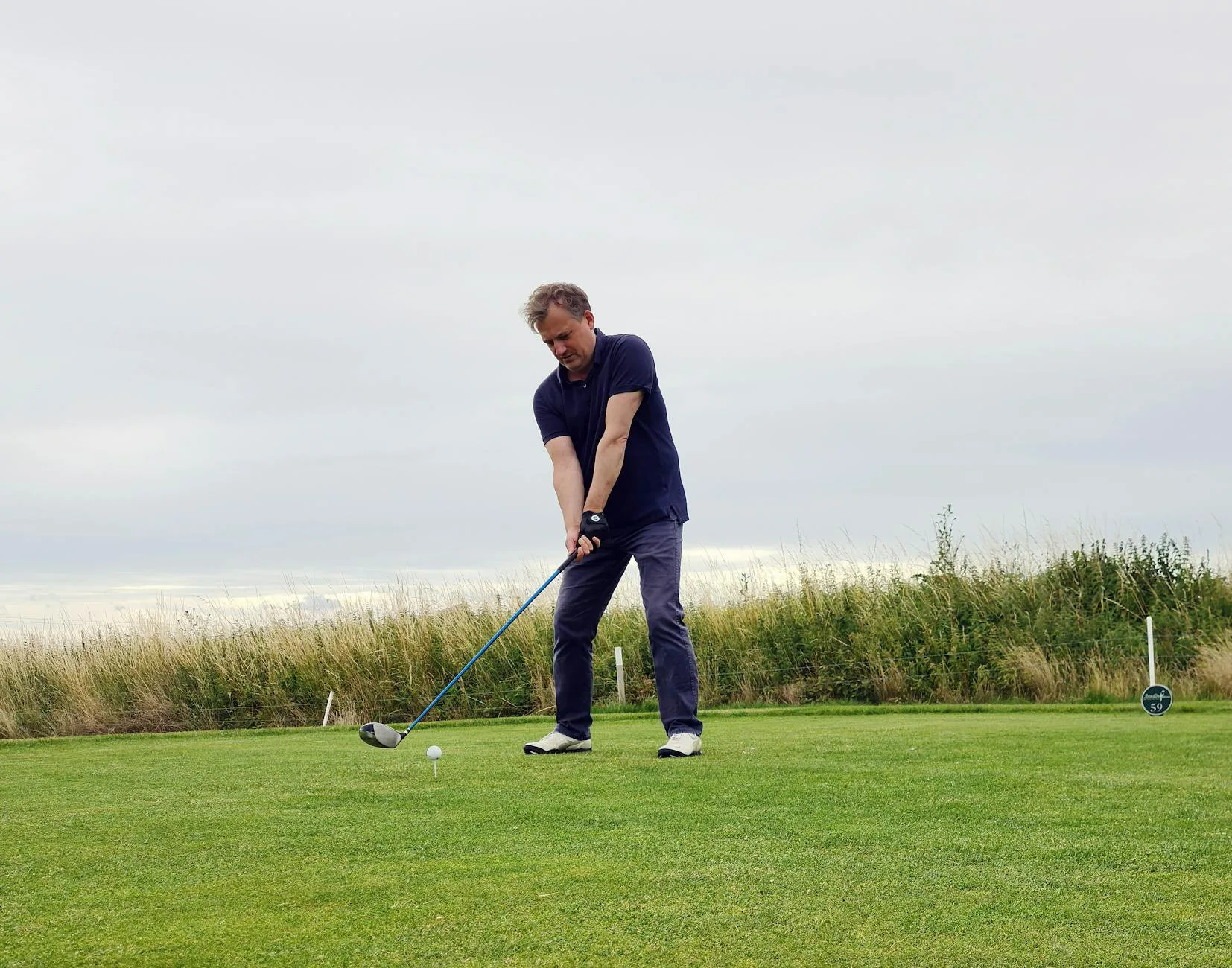
The swing itself is a surprisingly athletic movement. It’s not just arms.
Muscles Used in a Full Swing
A full golf swing engages your entire body in a coordinated sequence:
- Core — obliques, abdominals, and lower back provide the rotational power
- Legs — glutes, quadriceps, and calves generate ground force and stability
- Back — lats and trapezius muscles control the backswing and follow-through
- Shoulders and arms — deltoids, forearms, and wrists guide the club
- Chest — pectorals engage during the downswing
Over an 18-hole round, you make roughly 60-100 full swings (depending on your handicap — no judgement). Each swing involves a rotational force that peaks at considerable speed. That’s 60-100 explosive rotational movements in a single session.
Flexibility and Mobility
The golf swing requires rotation through the thoracic spine, hip mobility, and shoulder range of motion. Playing regularly maintains — and can improve — flexibility in these areas. Golfers who play two or three times a week often have better spinal rotation than non-golfers of the same age.
Grip and Forearm Strength
Gripping the club through 80+ shots per round works your forearms and hands more than you’d expect. Add in the impact vibration from hitting the ball and you’re getting sustained isometric forearm exercise. Not earth-shattering, but it adds up.
Cardiovascular Benefits
Golf might not get your heart rate up like a spin class, but the sustained moderate effort over 4-5 hours has real cardiovascular benefits.
Heart Rate During a Round
Studies show that walking golfers maintain a heart rate of 100-120 bpm for most of a round — roughly 50-70% of maximum heart rate for a middle-aged adult. That puts it squarely in the “moderate intensity” zone, which is exactly where the NHS and Sport England say you get the most benefit for heart health.
Blood Pressure and Cholesterol
Research published in the British Journal of Sports Medicine found that regular golfers showed improvements in blood pressure, cholesterol levels, and resting heart rate over time. The effect was most pronounced in golfers who walked rather than used buggies, and who played at least twice a week. For a related angle, see our Wedge Bounce and Grind Explained guide.
Longevity
A frequently cited Swedish study found that golfers have a 40% lower mortality rate compared to non-golfers of the same age and socioeconomic status. That translates to roughly five extra years of life expectancy. Correlation isn’t causation — golfers tend to be wealthier and have better healthcare access — but the physical activity component is a genuine contributor.
Mental Health and Stress Reduction
If you only count calories and heart rate, you miss half the picture. Golf’s mental health benefits are substantial and underappreciated.
Time Outdoors
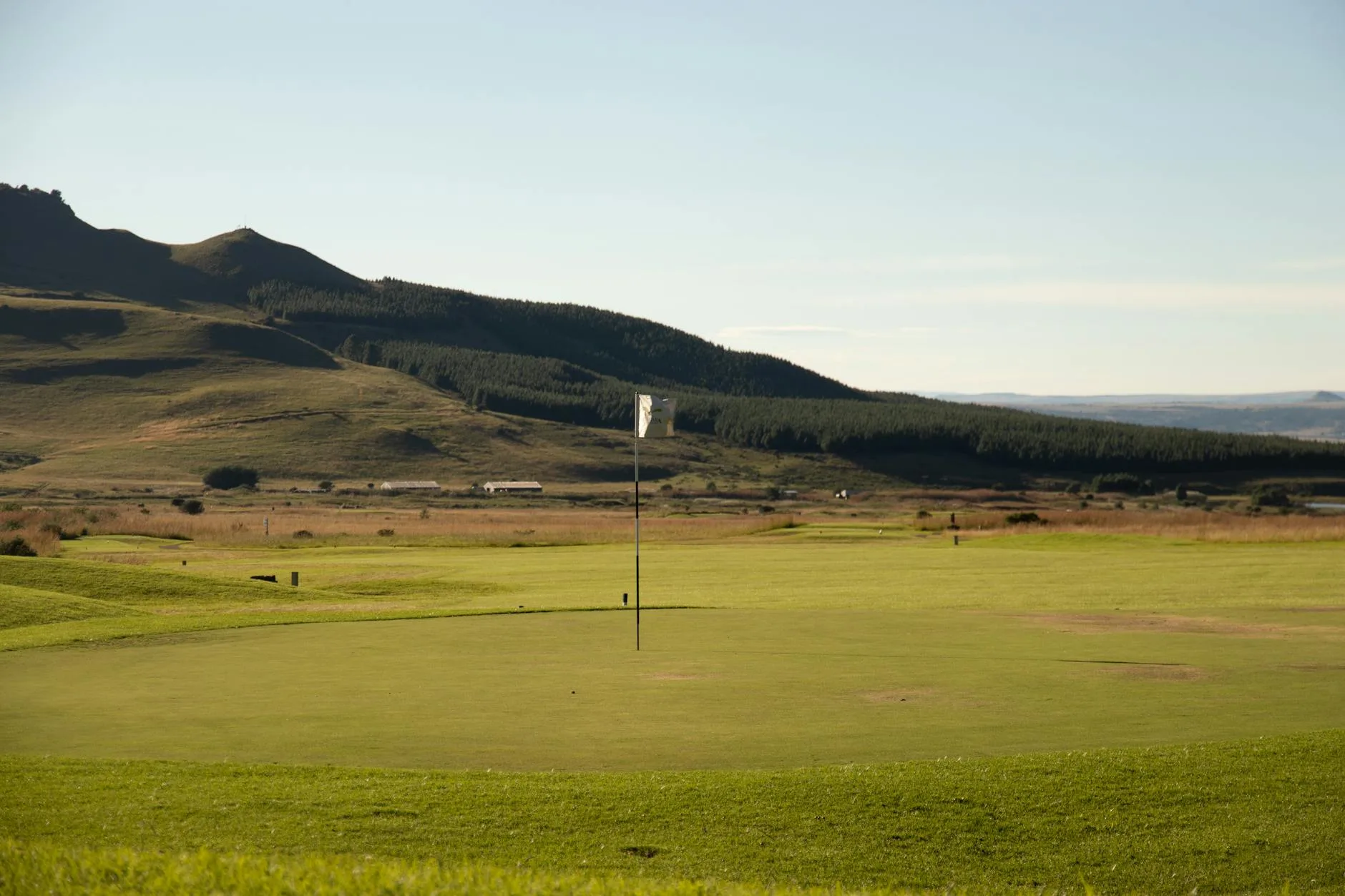
A round of golf puts you outside for 4-5 hours in green spaces. Exposure to natural environments reduces cortisol (the stress hormone), improves mood, and has been linked to better sleep. Golf courses are specifically designed to be beautiful — mature trees, water features, landscaped fairways. It’s a walk in the park, literally.
Social Connection
Golf is inherently social. You’re spending four hours with other people — talking, laughing, commiserating over missed putts. Social connection is one of the strongest predictors of mental health and longevity. For retirees especially, a regular golf group provides structure, purpose, and companionship that can be hard to find elsewhere.
Focus and Mindfulness
Each shot demands your full attention. You can’t worry about work while you’re reading a 15-foot putt. The concentration required provides a natural break from rumination and anxiety — a form of active mindfulness that doesn’t involve sitting on a cushion chanting.
Competition and Achievement
Improving your handicap, beating a personal best, winning a match — these provide a sense of achievement and progression that keeps you motivated to play. The handicap system means golfers of all abilities can compete meaningfully, which maintains engagement over decades.
Golf vs Other Activities: A Fair Comparison
Calories Per Hour
- Golf (walking, carrying) — 300-400 cal/hour
- Running (8 km/h) — 500-600 cal/hour
- Swimming (moderate) — 400-500 cal/hour
- Cycling (moderate) — 350-500 cal/hour
- Tennis (singles) — 400-600 cal/hour
- Walking (brisk) — 250-350 cal/hour
Golf comes in below running and swimming per hour, but the key difference is duration. Nobody runs for five hours. A round of golf provides more total exercise than most gym sessions simply because you do it for longer.
Injury Risk
Golf is remarkably low-risk compared to most sports. No sudden direction changes, no contact, no sustained high-impact loading. The most common golf injuries — lower back strain, golfer’s elbow, shoulder impingement — are typically overuse injuries that develop gradually, not acute injuries from a single incident. For long-term sustainability, golf beats running, football, tennis, and most team sports.
Sustainability Across Ages
This is golf’s greatest fitness advantage. You can play competitive golf at 75 in a way you can’t play competitive tennis or football. The handicap system adjusts for declining ability, courses offer shorter tees for seniors, and the low-impact nature means your body can handle it for decades. Many golfers play well into their 80s.
Who Benefits Most from Golf as Exercise
Over-50s
Golf is arguably the perfect exercise for the over-50 age group. Weight-bearing walking strengthens bones (reducing osteoporosis risk), the social element combats isolation, and the moderate intensity suits bodies that can’t take the pounding of high-impact sports. If you’ve been told to “do more exercise” by your GP, golf is a genuinely enjoyable way to follow that advice. Our How to Break 100: Realistic Tips for Beginners guide is useful alongside this.
Desk Workers
If you sit at a desk all week, 18 holes on Saturday is a genuine antidote. You’re on your feet for hours, rotating your spine, using muscles that atrophy at a computer. The mental reset from spending a day outdoors after a week indoors is worth as much as the physical benefit.
People Who Hate the Gym
Not everyone thrives in a gym environment. The music, the mirrors, the feeling of being watched — it puts a lot of people off. Golf is exercise disguised as a hobby. You get fitter without the self-consciousness of a gym floor. For people who struggle with exercise motivation, this matters enormously.
Rehabilitation Patients
Physiotherapists increasingly recommend golf for rehabilitation from cardiac events, joint replacements, and general deconditioning. The adjustable intensity (walk nine holes instead of 18, use a trolley instead of carrying) makes it scalable to almost any fitness level.
How to Maximise the Fitness Benefits
Walk, Don’t Ride
This is the single biggest variable. Walking rather than riding a buggy roughly doubles your calorie expenditure and provides all the cardiovascular benefit. If walking 18 holes is too much initially, walk nine and ride nine, then gradually increase.
Carry Your Bag (Sometimes)
Carrying a bag adds 30-50% more calorie burn compared to using a trolley. You don’t need to carry every round — even one carry round per week adds meaningful exercise. Use a modern lightweight stand bag (about £80-150 from American Golf or Decathlon) rather than a heavy tour bag. Our golf bag guide covers the best lightweight options.
Play More Often
Frequency matters more than intensity. Two rounds per week provides far more fitness benefit than one long round. Even nine holes after work counts — that’s still a 5-6 km walk with physical exertion from the swings.
Use the Practice Range
Hitting 50-80 balls on the range is a proper core workout. Each swing involves explosive rotation and controlled deceleration. Combine a range session with a short walk around the practice facilities and you’ve got a decent 45-minute workout without playing a full round.
Warm Up Properly
Cold swinging causes injuries and reduces performance. Five minutes of dynamic stretching — torso rotations, arm circles, hip swings, gentle practice swings building to full speed — warms the muscles and prepares the body. Our warm-up guide covers the full routine. Your first tee shot will be better for it, too.
The Limits of Golf as Exercise
Being honest: golf isn’t a complete fitness programme on its own.
What Golf Doesn’t Provide
- Upper body strength — the swing builds some muscular endurance, but it won’t replace push-ups or weight training
- High-intensity cardio — your heart rate rarely exceeds 120 bpm during a round. For serious cardiovascular fitness, you need something more intense occasionally
- Flexibility training — while the swing maintains some mobility, dedicated stretching or yoga provides deeper flexibility work
- Balance training — golf involves some balance, but not the progressive challenge that specific balance exercises provide
The Ideal Combination
Golf two or three times a week provides your moderate-intensity cardio base. Supplement with two sessions of either strength training, swimming, or a fitness class, and you’ve got a well-rounded fitness programme that’s enjoyable enough to actually stick with. That last part — sticking with it — is where golf beats most exercise plans. The best workout is the one you’ll actually do.
What the Research Says
Key Studies
The most thorough review of golf and health was published in the British Journal of Sports Medicine (Murray et al., 2017), analysing over 5,000 studies. Key findings:
- Golf is associated with improved cardiovascular health, body composition, and metabolic markers
- Regular golfers have lower rates of depression, anxiety, and dementia
- The physical activity from golf meets or exceeds WHO recommended guidelines for moderate exercise
- Social and mental health benefits are significant and often overlooked in exercise recommendations
The Golf and Health Project
Golf England partnered with the World Golf Foundation to study golf’s health impacts specifically in the UK context. Their findings reinforced that golf provides health benefits comparable to other moderate-intensity sports, with the added advantage of lifelong playability and strong social components.
Frequently Asked Questions
How many calories does 18 holes of golf burn? Between 800 and 2,000 calories depending on how you play. Walking and carrying your bag burns the most (1,200-2,000). Walking with a trolley burns 800-1,400. Riding a buggy drops it to 400-800. The biggest factor is whether you walk or ride.
Is golf enough exercise on its own? For general health and the NHS-recommended 150 minutes of moderate activity per week, yes — a single round exceeds that. For complete fitness (including strength and high-intensity cardio), you’d want to supplement with gym sessions or another sport twice a week. But golf alone is far better than no exercise.
Does golf count as moderate exercise? Yes. Walking golfers maintain a heart rate of 100-120 bpm for most of a round, which falls squarely in the moderate-intensity zone. The NHS classifies brisk walking as moderate exercise, and golf involves 4-5 hours of exactly that, plus the additional exertion of swinging a club 80+ times.
Can golf help with weight loss? Burning 1,000-1,500 calories per round creates a meaningful calorie deficit. Playing twice a week alongside a sensible diet can contribute to gradual, sustainable weight loss. You won’t lose weight as fast as someone running every day, but you’re much more likely to keep playing golf for years than keep running every day.
Is golf good exercise for older adults? Particularly good, in fact. The weight-bearing walking strengthens bones, the low-impact nature protects joints, the social element combats isolation, and the cognitive demands of course management may help maintain mental sharpness. Many health professionals specifically recommend golf for over-65s who need to increase their activity levels.