You’ve had a few lessons, you’re getting hooked, and now you’re standing in a golf shop staring at a wall of irons, woods, and wedges wondering how on earth you need 14 of these things. The guy behind the counter is talking about “game improvement loft gaps” and you’re nodding politely while having no idea what that means.
Here’s the good news: as a beginner, you don’t need 14 clubs. You don’t even need 10. You can play perfectly well — and arguably learn faster — with 7 or 8 carefully chosen clubs that cover the shots you’ll actually use on the course. Carrying fewer clubs simplifies decisions, lightens your bag, and lets you focus on developing a consistent swing rather than constantly switching between clubs you can’t hit yet.
I remember my first few rounds carrying a full set. Half of them stayed in the bag untouched. The 3-iron? Never once. The lob wedge? Thinned it across every green I tried it on. It took me months to realise I was making the game harder than it needed to be.
The Rules: You Can Carry Up to 14 Clubs
The R&A (which governs golf in the UK) allows a maximum of 14 clubs in your bag during a round. But there’s no minimum. You could play with one club if you wanted to (some people do for fun). The key is choosing the right combination for your ability.
For beginners, 7-9 clubs is the sweet spot. Enough to cover all the distances and shots you’ll encounter, few enough that you’re not overwhelmed by choice on every shot.
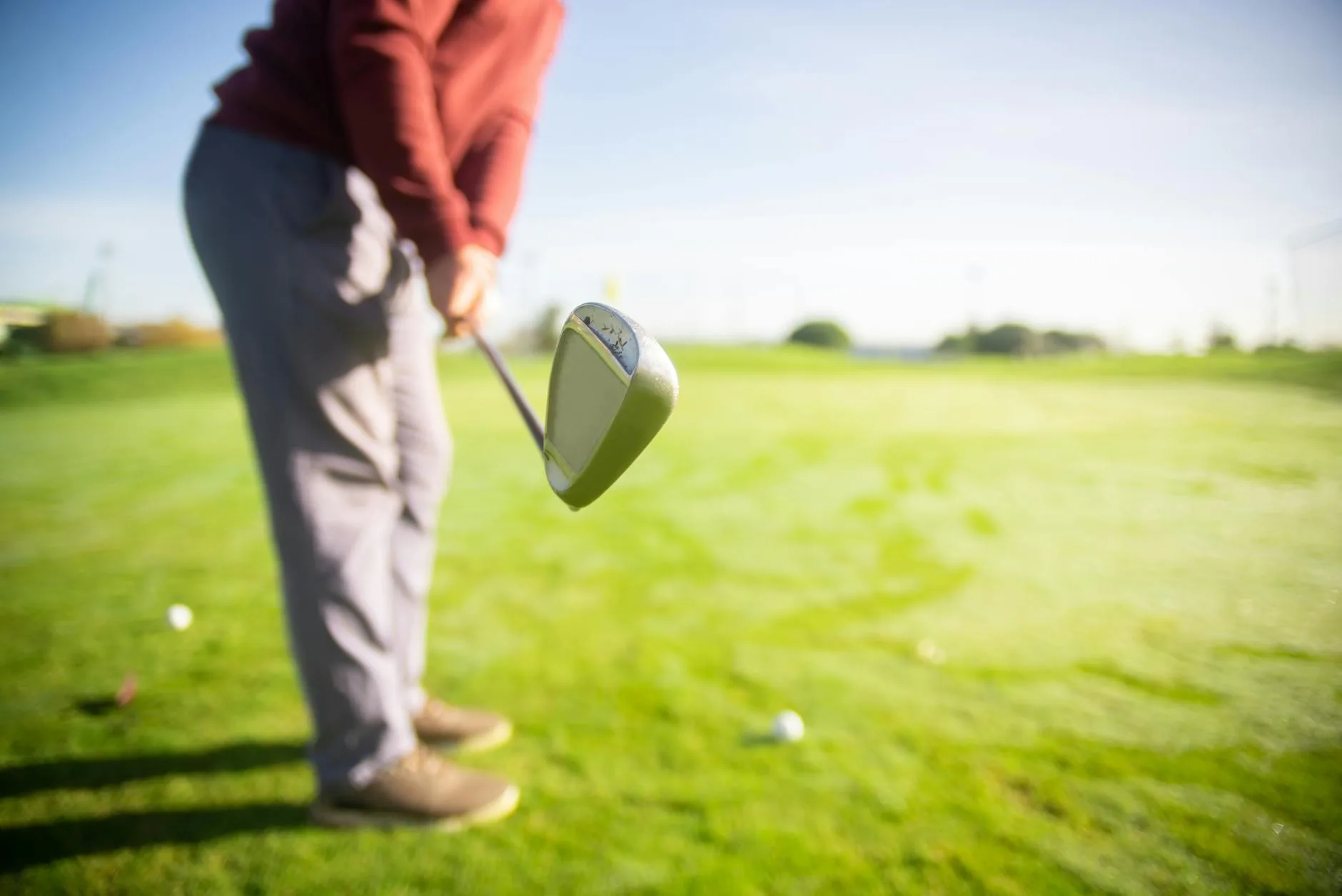
The Essential Beginner Set: 7-8 Clubs
Here’s what I’d recommend every beginner carries, and why:
Driver
What it does: Hits the ball the longest distance off the tee. You’ll use it on most par 4s and par 5s.
Why beginners need it: Despite what some coaches say about starting with irons only, a driver is essential for enjoying golf. Without one, you’re starting every long hole at a disadvantage, which makes the game slow and frustrating.
What to look for: Maximum forgiveness. A large clubhead (460cc — the maximum allowed), a regular flex shaft, and a loft of 10.5° or higher. Higher loft makes it easier to get the ball airborne.
UK pick: The clubs in the best beginner golf sets typically include a suitable driver. If buying separately, the Callaway Big Bertha or TaylorMade Qi10 are forgiving options (about £250-350 from American Golf, Scottsdale Golf, or Amazon UK). For a budget option, the Wilson D9 (about £150) is solid.
Fairway Wood (5-Wood or 7-Wood)
What it does: Hits long shots from the fairway or tee when you don’t want to use a driver. The 5-wood typically carries 160-180 yards for beginners; the 7-wood is shorter but easier to hit.
Why beginners need it: You need something for long approach shots on par 5s and long par 4s. A fairway wood is much easier to hit than a long iron.
My recommendation: A 7-wood. It’s more forgiving than a 5-wood, launches the ball higher, and is one of the most underrated clubs in golf. Many beginners find it’s their most reliable long club after the driver.
Hybrid (5-Hybrid or 6-Hybrid)
What it does: Bridges the gap between fairway woods and mid-irons. A 5-hybrid replaces a 5-iron but is noticeably easier to hit.
Why beginners need it: Long irons (3, 4, 5) are among the hardest clubs to hit in golf. A hybrid does the same job with a wider sole, lower centre of gravity, and more forgiveness. You’ll make solid contact far more often.
UK pick: The Ping G430 hybrid (about £170) is excellent. For budget options, most beginner sets include at least one hybrid. If adding to an existing set, the Cleveland Launcher XL Hype (about £100) is forgiving and well-priced. For a related angle, see our Titleist Pro V1 vs V1x: Which Ball Is Right for You? guide.
Irons (7-Iron and 9-Iron)
What it does: These are your bread-and-butter approach clubs. The 7-iron covers 120-150 yards; the 9-iron covers 90-120 yards.
Why just two? As a beginner, you don’t have the consistency to genuinely distinguish between a 6, 7, and 8-iron. They’ll all go roughly the same distance because your strike varies so much. Carrying a 7 and a 9 gives you two clear distance options without the confusion of five similar clubs.
What to look for: Game improvement irons with wide soles, perimeter weighting, and a large sweet spot. The differences between blade and cavity back irons matter here — you want cavity backs or game improvement, never blades.
Avoiding the full iron set trap: Beginner box sets come with 5-PW (six irons). That’s fine as a starter package, but you really don’t need the 5 and 6-iron yet. If you’re building a custom beginner bag, save that money and spend it on a good hybrid instead.
Pitching Wedge
What it does: Covers 80-110 yards and is your main club for approach shots into greens from shorter distances. Also useful for chipping around the green.
Why beginners need it: This is the club you’ll use for most shots within 100 yards of the green. It’s versatile enough for full swings, half swings, and chip shots.
The good news: This almost definitely comes with any iron set or beginner package you buy. Loft is typically 44-46°.
Sand Wedge
What it does: Gets you out of bunkers and handles delicate shots around the green. Typically 54-56° of loft.
Why beginners need it: You will end up in bunkers. Without a sand wedge, getting out becomes an exercise in frustration. The wider bounce angle on a sand wedge prevents it from digging into the sand, which is exactly the problem you’ll have if you try to play bunker shots with a pitching wedge.
UK pick: The Cleveland CBX ZipCore (about £100) or, for a budget option, any sand wedge from a beginner set. Even a second-hand sand wedge from eBay or a pro shop clearance bin will do the job.
Putter
What it does: Rolls the ball on the green into the hole. You’ll use it more than any other club — roughly 40% of all your shots.
Why beginners need it: Obviously. But the type matters. A mallet putter with a large head and alignment aids is far more forgiving than a blade putter. The difference between blade and mallet putters is worth understanding before you buy.
UK pick: The Odyssey White Hot OG (about £130) is brilliant for beginners. For budget options, the Wilson Harmonized (about £25-30 from Amazon UK) is surprisingly good for the price.
Clubs You Don’t Need Yet
This is just as important as knowing what to carry. These clubs will actively make your game worse at this stage:
- 3-Iron and 4-Iron: Brutally hard to hit. Replace with a hybrid.
- Lob Wedge (58-60°): Requires precise technique to avoid thinning it across the green. Your sand wedge handles everything a beginner needs.
- 3-Wood: Similar distance to your driver but harder to hit off the fairway. The 5-wood or 7-wood is more versatile.
- Gap Wedge (50-52°): Nice to have eventually, but beginners don’t have the distance control to need precise gapping between wedges.
- Multiple drivers or putters: One of each. Carrying a “backup” wastes bag space.
As your game improves and you develop consistent distances with each club, you’ll naturally fill in the gaps. A typical progression might be adding a gap wedge, then a 6-iron, then replacing the 7-wood with a 3-wood as your ball-striking improves. For independent guidance, check England Golf guidance.
Beginner Set vs Building Your Own
Beginner Box Sets
These are the most cost-effective way to start. A full set (driver, wood, hybrid, 5-PW irons, putter, and bag) costs about £200-400 from brands like Wilson, Callaway Strata, or MacGregor.
Pros:
- Everything you need in one purchase
- Properly matched clubs (shaft flex, length, and weight are consistent)
- Includes a bag, usually a stand bag
- Available at Decathlon, American Golf, Argos, and Amazon UK
Cons:
- Quality of individual clubs is lower than buying separately
- Limited customisation
- You’ll outgrow them within 1-2 years if you play regularly
- Often include clubs you don’t need yet (5-iron, 6-iron)
Building Your Own Set
More expensive upfront but you get better individual clubs. Buy the 7-8 clubs listed above, focusing quality spending on the putter, driver, and hybrid — the three clubs where forgiveness matters most.
Where to find deals in the UK:
- American Golf — largest UK golf retailer, good for trying before buying, regular sales
- Scottsdale Golf — excellent online selection, competitive prices
- GolfBidder — the UK’s biggest second-hand golf club site. Brilliant for picking up nearly-new clubs at half price
- eBay — hit or miss, but pro shop clearance items can be genuine bargains
- Decathlon Inesis range — surprisingly good budget clubs that punch above their weight
How to Organise Your Beginner Bag
Even with 7-8 clubs, bag organisation matters. Here’s a sensible layout:
- Top section: Driver and fairway wood (longest clubs, easy to grab)
- Middle section: Hybrid and 7-iron
- Bottom section: 9-iron, pitching wedge, sand wedge
- Putter well/slot: Putter goes in its own section, usually at the front or side
Keep your bag as light as possible. A lightweight stand bag (about £80-120) is better than a cart bag for beginners — you’ll carry it more than you think, especially at courses without buggies. If you’re shopping for one, our guide to the best golf umbrellas and weather essentials covers what else to keep in your bag.
Distance Guide for Beginner Clubs
These are approximate distances for an average male beginner with a moderate swing speed. Women and senior golfers typically hit 10-20% shorter. Your actual distances will vary — and that’s fine.
- Driver: 160-200 yards
- 7-Wood: 140-170 yards
- 5-Hybrid: 130-160 yards
- 7-Iron: 120-145 yards
- 9-Iron: 90-120 yards
- Pitching Wedge: 80-110 yards
- Sand Wedge: 60-90 yards
The gaps between these clubs are roughly even at 20-30 yards, which is exactly what you want. You don’t need a club for every 10-yard increment — you don’t have that level of control yet, and neither does anyone who hasn’t been playing for years.

When to Add More Clubs
You should add clubs when you notice a consistent distance gap that’s costing you shots. Common signs:
- You keep coming up 20 yards short between your hybrid and 7-iron: Time to add an 8-iron or 6-hybrid.
- You’re reaching fairways consistently with your driver: Consider adding a 3-wood for extra reach on par 5s.
- You can control trajectory with your sand wedge: A gap wedge (50-52°) gives you more options around the green.
- Your scores are consistently below 100: You’re ready for a more complete set.
Don’t rush this. Playing with fewer clubs for your first 6-12 months builds better feel and shot-making creativity than immediately filling every bag slot.
My Bottom Line
Start with: driver, 7-wood (or 5-wood), 5-hybrid, 7-iron, 9-iron, pitching wedge, sand wedge, and putter. That’s 8 clubs. You can play any course in the UK with this setup, and you’ll learn faster with fewer decisions to make.
If budget is tight, a beginner box set from Wilson or Callaway Strata (£200-350) gives you everything you need plus a bag. If you can spend more, build a custom set focusing on a forgiving driver, a reliable hybrid, and a good putter.
The 14-club maximum exists for a reason — even professionals don’t carry every club ever made. As a beginner, less really is more.
Frequently Asked Questions
How many clubs should a beginner carry? Seven to nine clubs is ideal for beginners. This covers all the distances you need without overwhelming you with choices. As your game improves and you develop consistent distances, gradually add more clubs up to the 14-club maximum.
Do I need a 3-wood as a beginner? No. A 5-wood or 7-wood is much easier to hit and more versatile. The 3-wood is one of the hardest clubs in the bag to hit consistently. Wait until your ball-striking is reliable before adding one.
Should I buy a beginner box set or individual clubs? A box set is the most cost-effective way to start, costing £200-400 for everything including a bag. Individual clubs are better quality but cost more. If you think you will play regularly, investing in quality from the start saves money long-term.
Is it worth buying second-hand golf clubs? For beginners, second-hand clubs are excellent value. Sites like GolfBidder and eBay sell nearly-new clubs at 40-60% off retail. Just make sure the grips are in decent condition and the shafts are the right flex for your swing speed.
What is the most important club for a beginner? The putter. You will use it on every hole, typically for 35-45% of your total shots. A good putter with alignment aids makes a bigger difference to your score than an expensive driver.