Walk into any golf shop and the iron wall is overwhelming. Hundreds of club heads that look subtly different, with price tags ranging from £200 to £2,000+ per set. The sales staff will throw around terms like “game improvement”, “players’ cavity”, and “muscle back” as if everyone knows what they mean.
They don’t. And the wrong choice genuinely costs you shots.
Iron design affects how forgiving your clubs are on mishits, how much control you have over ball flight, and whether golf feels enjoyable or punishing on any given day. Here’s what actually matters when choosing between the main iron categories. We’ve tested irons across all three categories on the range and on course to see how the differences play out in practice.
What Makes Irons Different
Every iron has to do the same basic job: get the ball from fairway to green with predictable distance and direction. The difference between categories comes down to where the weight sits in the club head.
Think of it like a tennis racket. A small-headed racket gives an expert player incredible precision. A large-headed racket gives a beginner a much bigger sweet spot. Neither is “better” — they’re tools designed for different skill levels.
With irons, weight distribution creates a spectrum from maximum control (blades) to maximum forgiveness (super game improvement), with cavity backs sitting in between.
Blade Irons (Muscle Back)
Blades are the traditional iron design — a solid piece of forged steel with all the weight concentrated directly behind the sweet spot. No cavity, no tricks, no safety net.
Why Good Players Love Them
- Pure feel — when you flush a blade, you know it instantly. The feedback through your hands is immediate and precise. You can feel the difference between hitting it a millimetre off-centre
- Shot shaping — blades make it easier to work the ball left-to-right or right-to-left deliberately. The compact head and concentrated weight respond to face angle and swing path
- Trajectory control — skilled players can flight the ball lower or higher by adjusting their technique, and blades respond faithfully
- Clean look at address — thin top line, minimal offset, compact head. Most tour pros play something close to a blade because they prefer this visual
The Brutal Downside
Miss the sweet spot by even 5mm and you’ll know about it. Distance drops off noticeably, the ball curves offline, and it stings your hands in cold weather. There’s almost no forgiveness.
A scratch golfer hitting a blade 5mm off-centre might lose 8-10 yards and see the ball drift 15 feet offline. The same mishit with a game improvement iron might lose 3 yards and drift 5 feet. That difference adds up over 18 holes.
Who Should Play Blades
Really, almost nobody outside professional golf. You need a handicap of 5 or lower, a consistent swing, and you need to practise regularly. If you play once a fortnight, blades will make golf harder, not better.
That said — if you’re a low single-figure player who values feel and shot-making over forgiveness, and you hit the centre of the face most of the time, blades are deeply satisfying to play.
Popular blade models in the UK:
- Titleist 620 MB (around £900-1,100 per set)
- Mizuno Pro 225 (around £950-1,100)
- Callaway Apex MB (around £1,000-1,200)
- Srixon Z-Forged II (around £850-1,000)
Cavity Back Irons
Cavity backs are the middle ground — and where most decent golfers end up. The back of the club head has material removed from behind the sweet spot and redistributed around the edges (the “perimeter”).
How They Work
By pushing weight to the heel, toe, and sole of the club head, cavity backs increase something called Moment of Inertia (MOI). In plain English: the club head resists twisting on off-centre hits, so mishits don’t fly as far offline. For a related angle, see our Best Golf Irons 2026 UK: Game Improvement & Players guide.
You still get plenty of feel and workability, but there’s a safety net underneath. Think of it as training wheels that you can’t actually see.
The Sub-Categories
Cavity backs actually split into two distinct groups:
Players’ cavity backs — smaller heads, thinner top lines, less offset. Designed for mid-to-low handicappers who want some forgiveness without sacrificing too much feel. These look close to blades at address but perform noticeably better on mishits.
- Titleist T150 (around £1,000)
- TaylorMade P7MC (around £1,100)
- Ping i525 (around £900)
Standard cavity backs — slightly larger heads, moderate offset, more visible cavity. The sweet spot for mid-handicappers (8-18 handicap) who want a blend of forgiveness and control.
- Titleist T200 (around £1,000-1,100)
- Callaway Apex (around £1,000)
- TaylorMade P790 (around £1,100)
- Mizuno JPX925 Forged (around £900-1,000)
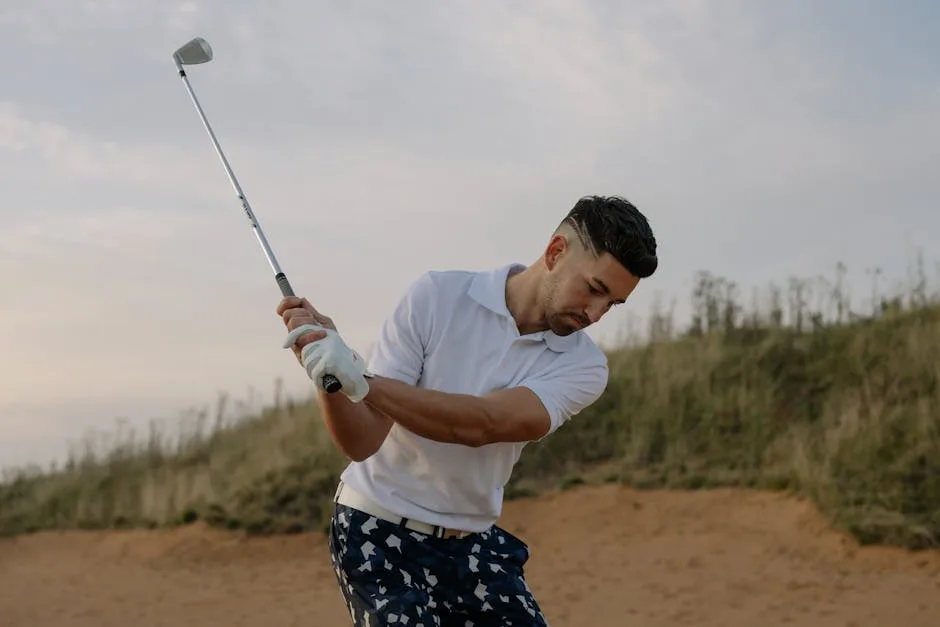
Who Should Play Cavity Backs
If your handicap is between 5 and 18 and you play regularly, a cavity back is almost definitely your best option. You get meaningful forgiveness on mishits whilst still being able to shape shots when you want to.
Most club golfers who think they should be playing blades would actually score better with a players’ cavity. Pride is expensive — it costs about 3-5 shots per round.
Game Improvement Irons
This is where the engineering gets serious. Game improvement irons use every design trick available to make the ball go straight, go far, and go high — even when you don’t hit it perfectly.
The Design Tricks
- Wide soles — the club glides through the turf rather than digging in, which is hugely helpful for players who hit behind the ball
- Low centre of gravity — gets the ball airborne more easily, even from tight lies
- Massive perimeter weighting — MOI is maximised, meaning mishits barely lose distance or direction
- Strong lofts — a game improvement 7-iron might have 28-29° of loft compared to 34° in a blade. This makes each club hit further, which feels great (though it does compress the distance gaps between clubs)
- Thinner, faster faces — some models use variable face thickness or even different face materials to boost ball speed across a larger area
The Strong Loft Question
This is worth understanding because it causes confusion. When a manufacturer says their game improvement 7-iron goes 160 yards compared to 145 from a traditional 7-iron, they’re partly right — but it’s because they’ve strengthened the loft. Their 7-iron has the loft of a traditional 6-iron. Our Best Golf Putters 2026 UK: Blade, Mallet & High-MOI guide is useful alongside this.
This isn’t necessarily a problem — you just end up with different distance gaps and might need a different wedge setup. But it does mean you shouldn’t compare “7-iron distance” between game improvement and traditional irons. Compare the same lofts, not the same numbers.
Popular Game Improvement Irons in the UK
- Callaway Rogue ST Max (around £700-800) — massive forgiveness, good feel for the category
- TaylorMade Stealth (around £700-800) — cap back design, very consistent
- Ping G430 (around £750-900) — possibly the most forgiving irons ever made
- Cleveland Launcher XL (around £500-600) — outstanding value
- Cobra Air-X (around £400-500) — lightweight, easy to hit, great price
Who Should Play Game Improvement Irons
Handicaps of 15-28, inconsistent ball strikers, players who don’t practise much, anyone who wants golf to be more enjoyable and less punishing. There’s completely no shame in it — the majority of golfers worldwide play game improvement irons.
If you’re constantly hitting thin shots, fat shots, or losing distance on mishits, game improvement irons will transform your experience immediately.
Super Game Improvement Irons
The most forgiving category takes everything from game improvement and turns it up further. Oversized heads, ultra-wide soles, maximum offset, and sometimes hybrid-style long irons instead of traditional 4 and 5 irons.

Who Needs Them
- Complete beginners who are still learning to make consistent contact
- Golfers with physical limitations (reduced mobility, arthritis, slower swing speeds)
- Senior golfers who’ve lost swing speed and need help getting the ball airborne
- Anyone whose main goal is enjoying their round rather than optimising technique
Popular Options
- Cleveland Launcher XL Halo (around £500-600) — iron/hybrid construction throughout
- Callaway Big Bertha (around £600-700) — iconic name, truly easy to hit
- Cobra T-Rail (around £350-450) — hybrid design, excellent for seniors
- Wilson SGI (around £300-400) — budget-friendly, does the job
How to Actually Choose
Be Honest About Your Game
The single biggest mistake golfers make when buying irons is choosing with their ego. Playing blades when you’re a 15-handicapper doesn’t make you look good — it makes you shoot 85 instead of 80. We cover a similar decision in How to Choose the Right Golf Clubs for Your Game.
Ask yourself:
- How often do I play? (Less than weekly = lean toward more forgiveness)
- How consistent is my ball striking? (If you thin/fat it regularly = game improvement)
- What matters more — feel on perfect shots or forgiveness on bad ones?
- Am I improving or has my game plateaued?
Get Fitted
This applies to every category. A £500 set of game improvement irons fitted properly to your swing will outperform a £1,200 set of blades off the rack.
Fitting covers:
- Shaft flex — Regular, Stiff, Senior (based on swing speed and tempo)
- Shaft material — steel (heavier, more consistent) or graphite (lighter, higher launch)
- Lie angle — affects whether the ball pulls left or pushes right
- Length — based on your height and wrist-to-floor measurement
- Grip size — affects wrist action through impact
Most pro shops and golf retailers in the UK offer free or low-cost fitting sessions. England Golf maintains a directory of affiliated clubs with qualified fitting professionals. American Golf, Golfsupport, and Foremost Golf all have fitting centres. Custom-fit sets typically add £50-100 to the price but make a measurable difference.
Consider Mixed Sets
There’s no rule saying every iron in your bag has to be the same model. Many good players use:
- Players’ cavity backs for short irons (8-PW) where precision matters
- Standard cavity backs for mid-irons (5-7) where a bit of forgiveness helps
- Hybrids for long irons (3-4) where launch height is the priority
This “combo set” approach is increasingly popular and makes real sense if you hit your short irons consistently but struggle with long irons.
Try Before You Buy
Most major UK golf retailers let you test irons on their simulators or driving ranges:
- American Golf — fitting centres in most large stores
- Scottsdale Golf — excellent online and in-store
- Foremost Golf — network of independent pro shops
- Club Champion — premium fitting experience (London)
Hit at least 10 balls with each club you’re considering. Pay attention to mishits, not your best shots — that’s where the difference between iron types really shows.
How to Transition Between Iron Types
Many improving golfers face a dilemma: they’ve outgrown their game improvement irons but aren’t ready for blades. The transition doesn’t have to be all or nothing, and a blended set is often the smartest approach.
A blended set uses more forgiving clubs in the long irons (4, 5, 6) where mishits are more common, and less forgiving but more controllable clubs in the short irons (8, 9, PW) where precision matters more. Most major manufacturers now design their iron lines to blend across categories — Ping’s i-series, TaylorMade’s P-series, and Callaway’s Apex range all allow you to mix models within a matched weight and length progression.
The practical approach for a golfer dropping from, say, 18 to 10 handicap: keep game improvement long irons and switch to players’ cavity backs from 7-iron down. This gives you the forgiveness you need on the harder-to-hit clubs while gaining the control you’re developing on shorter approach shots. As your ball-striking improves, you can gradually replace the long irons too.
One point worth noting: switching iron types mid-season is risky. Any new clubs need at least a few range sessions and a handful of casual rounds before they feel natural. Make equipment changes during winter or early spring when the stakes are lower and you have time to adjust before competition season.
The Bottom Line
The iron market wants you to believe that better irons = better golf. That’s only half true. Better-suited irons = better golf. A 20-handicapper playing Ping G430s will have more fun and shoot lower scores than the same player struggling with Titleist MBs.
Match the club to your actual game, not your aspirational one. Get fitted properly — and make sure the shaft flex suits your swing speed too. If in doubt, go one category more forgiving than you think you need. Your scorecard will thank you. If you’re just starting out, our best golf clubs for beginners guide covers full set recommendations.
Frequently Asked Questions
How do I know if golf clubs fit me? Check length, lie angle, shaft flex and how consistently you strike the ball. A basic fitting is worthwhile once your swing is repeatable.
Should beginners get fitted for clubs? A full premium fitting is not essential on day one, but beginners still benefit from clubs with suitable length, flex and forgiveness.
Is expensive golf equipment worth it? It helps only when it solves a real fit or performance problem. Lessons and practice usually beat premium gear for newer players.
What should I check first with Golf Irons Explained: Blade vs Cavity Back vs Game Improvement? Start with the real use case, then check size, compatibility, running costs and maintenance. A product that looks good on paper can still be the wrong fit if it does not suit the room, routine or budget.
How do I avoid wasting money on Golf Irons Explained: Blade vs Cavity Back vs Game Improvement? Avoid buying on one headline feature alone. Compare the practical details, read the warranty or returns terms, and choose the option that solves your main problem rather than the one with the longest specification list.