You’ve just bought your first box of tees from the pro shop, tipped them into your bag pocket, and now you’re wondering why the bloke on the next tee box is using something that looks like it belongs in a science lab. It’s a golf tee — how complicated can it be? More complicated than you’d think, and the type you use genuinely affects how the ball launches off the clubface.
Golf tees types explained doesn’t sound like the most thrilling topic, but picking the wrong tee height or material can cost you distance, consistency, and money over a season. The good news is that once you understand what’s out there, the choice becomes dead simple.
Why Your Golf Tee Actually Matters
Most club golfers treat tees as disposable afterthoughts — grab whatever’s in the bottom of the bag and crack on. But the tee does two important jobs. First, it sets the ball at the right height for whatever club you’re hitting. Too low with a driver and you’ll hit down on it, launching the ball low with too much spin. Too high and you’ll sky it, leaving that embarrassing scuff mark on the crown.
Second, the tee creates friction (or reduces it) at the moment of impact. This is where material and design start to matter. A standard wooden tee grips the ball slightly as the club passes through, while some performance tees are designed to reduce that contact, potentially adding a few yards.
Is it going to transform your game overnight? No. But over 14 tee shots per round, small gains compound. And if you’re already spending hundreds on the right clubs, it makes sense to pair them with tees that aren’t working against you.
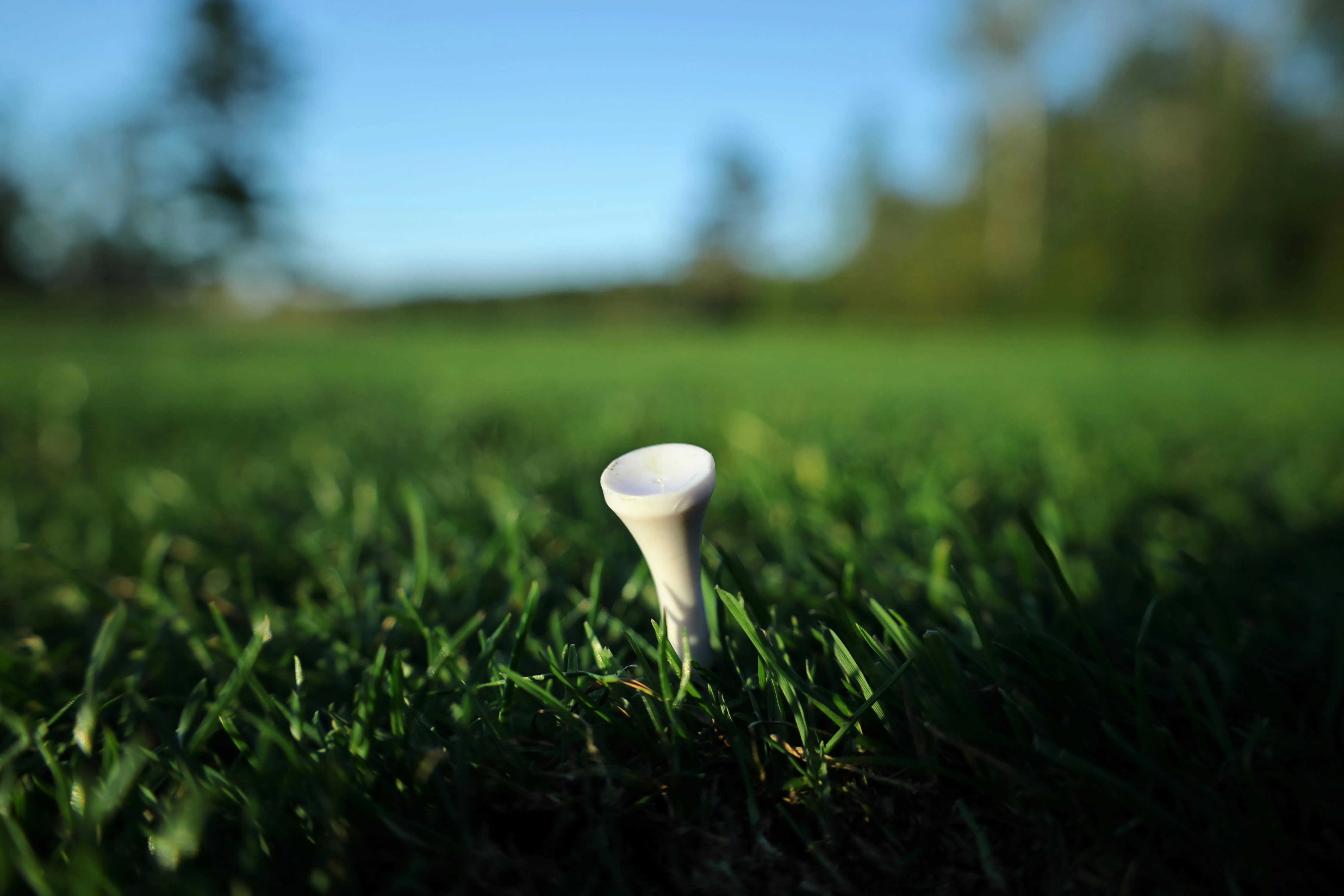
Wooden Tees: The Classic Choice
Wooden tees have been around since the 1920s, and there’s a reason they’re still the most popular option in golf. They’re cheap, biodegradable, and they work. Walk into any pro shop or golf section at Decathlon and you’ll find bags of 100 for about £3-5.
What You Get
- Natural feel — wooden tees have a satisfying snap when you strike well, and most golfers grew up using them
- Biodegradable — they break down naturally, so the fragments you leave scattered across the tee box aren’t polluting the course
- Cheap as chips — even premium birch tees cost pennies each, so losing or breaking them is painless
- Universally accepted — no funny looks from your playing partners or questions about whether they’re legal
The Downsides
They break. A lot. You’ll snap two or three per round easily, and sometimes they split on the first swing. That means you’re constantly reaching into your pocket for a fresh one, which isn’t a big deal but it does add up over a season. A keen golfer playing 40 rounds a year might get through 200+ tees.
The other issue is consistency. Because wooden tees are simple pegs, you’re eyeballing the height every time you push one into the ground. On a soft day after rain, it slides in easily and you might tee it too high. On baked summer fairways (all three days of UK summer), you’re hammering it in and guessing.
Best Wooden Tees to Buy
The Zero Friction 3-Prong wooden tees (about £5 for 40) are a nice upgrade — three contact points instead of a flat cup, which reduces friction. For basic bulk tees, the Masters Golf wooden tees (£3 for 100 from American Golf or Amazon UK) do the job without fuss.
Plastic Tees: Built to Last
Plastic tees solve the biggest gripe about wooden ones: they don’t break every other hole. A decent plastic tee can last an entire round, sometimes several rounds, which makes them better value despite costing more upfront.
What You Get
- Durability — most plastic tees survive dozens of shots without snapping
- Consistent height — many plastic tees have graduated markings or step designs that let you set the same height every time
- Visibility — they come in bright colours, so you’re less likely to lose them in the rough beside the tee box
- Cost-effective long term — spending £6 on a pack of 10 that each last 20 rounds beats buying wooden tees constantly
The Downsides
They’re not biodegradable. Every plastic tee that snaps or gets left behind is sitting in the ground for decades. Some courses have started discouraging them for exactly this reason, particularly eco-conscious clubs that are working towards sustainability certifications.
There’s also a feel issue. Some golfers find that plastic tees create a slightly different sensation at impact — a harder, less forgiving contact compared to wood. It’s subtle, and plenty of golfers don’t notice at all, but if you’re particular about feel, it’s worth trying before you commit to a bulk purchase.
The Step Tee Revolution
The biggest innovation in plastic tees is the step or castle design. Instead of a smooth shaft, these tees have a built-in ledge that stops the tee going into the ground past a certain point. You push it in until the step sits flush with the turf, and the ball height is identical every time.
This is really useful. Consistent tee height means consistent launch conditions, which means more predictable drives. The Pride Professional Tee System (about £4-6 for a mixed pack) colour-codes different heights — red for drivers, blue for hybrids, white for irons. It takes the guesswork out completely.
Other popular options include the Castle Tee (a UK invention, actually — about £3 for 20 from most pro shops) which uses a flat platform with raised prongs. They’re everywhere on UK courses and most golfers have used them at some point.
Performance Tees: Engineering Meets the Tee Box
This is where things get interesting — and where the price jumps. Performance tees are designed with specific aerodynamic or friction-reducing features that claim to add distance or improve accuracy. Some of these claims are backed by reasonable science. Others are pure marketing.
How They Work
Most performance tees focus on one principle: reducing the friction between the ball and the tee at impact. When a driver strikes the ball on a standard tee, the ball pushes against the tee cup before launching. That tiny moment of resistance can influence spin rates and launch angle.
Performance tees tackle this with various approaches:
- Brush tees — the ball sits on a cluster of flexible bristles instead of a solid cup, so it lifts off with almost zero resistance
- Pronged tees — three or four thin prongs hold the ball with minimal contact area
- Spring-loaded tees — the shaft flexes on impact, absorbing energy that would otherwise go into the tee rather than the ball
- Low-friction coatings — some tees use materials or surface treatments specifically engineered to let the ball slide off cleanly
Do They Actually Work?
Here’s where I’ll be honest with you. The distance gains from performance tees are real but small — most independent testing shows 2-5 yards at best, and that’s under controlled conditions. On the course, your swing path, angle of attack, and whether you actually hit the middle of the face will matter about 50 times more than what tee you’re using.
That said, 2-5 yards for the cost of a tee? If you’re a competitive player or you’re chasing every marginal gain, it’s an easy win. For casual weekend golfers, it’s probably not worth the premium — spend that money on a lesson instead.
Best Performance Tees to Buy
The Martini Tees (about £8-10 for 5) are the most recognisable performance tee on the market. They have a wide, concave cup that holds the ball with very little contact. They’re virtually indestructible and legal for competition play. The downside is they look odd and some golfers find them fiddly to push into hard ground.
Brush-T tees (about £6-8 for 3) sit the ball on flexible nylon bristles. They really do reduce spin on drives — multiple robot tests have confirmed this. They last ages too, though the bristles do eventually wear down after 50+ shots.
For something less radical, the Zero Friction Tour 3-prong tees (about £5-7 for 30) offer a nice middle ground. Three thin prongs hold the ball with less surface contact than a traditional cup, but they still look and feel like a normal tee. These are probably the best entry point into performance tees without going full space-age.
Choosing the Right Tee Height
Whatever type of tee you choose, getting the height right matters more than the material. Here’s the general rule:
- Driver — half the ball should sit above the crown of the club when it’s soled on the ground. That’s usually about 50-70mm of tee above the turf
- Fairway woods and hybrids — the ball should sit just above the top of the clubface. Around 25-40mm above the turf
- Irons off the tee — barely above the ground, maybe 10-15mm. You want to replicate a good lie on the fairway, not elevate it
If you’re using step tees, match the colour to the club. If you’re using plain tees, try the pushpin test: push the tee in, place the club next to it, and check the ball position relative to the clubface. Do this a few times on the practice ground and you’ll develop a feel for it.
One thing worth noting — tee height should change if you’re adjusting your shaft flex. A stiffer shaft with a lower ball flight might benefit from teeing slightly higher to optimise launch angle, while a more flexible shaft that already launches high might play better with the ball fractionally lower.
Tee Rules: What’s Legal and What’s Not
The R&A (who govern the rules in the UK and most of the world outside the US) have specific rules about tees. Under the Equipment Rules, a tee must:
- Be no longer than 101.6mm (4 inches)
- Not be designed to indicate the line of play
- Not unduly influence the movement of the ball
This means novelty tees with built-in alignment aids aren’t legal for competition, and neither are tees that actively propel the ball. Everything mentioned in this article is fully conforming — brush tees, step tees, pronged tees, all fine for your monthly medal.
You can check the R&A’s equipment database if you want to verify a specific brand, but realistically, if you’ve bought it from a reputable golf retailer in the UK, it’s legal.

Wood vs Plastic vs Performance: The Honest Comparison
Let me cut through the noise and give you a straight answer based on what kind of golfer you are.
If you’re just starting out — buy a bag of cheap wooden tees and don’t think about it again until you’re breaking 100 consistently. Your energy is better spent on learning the basics of the game and getting comfortable with your swing. At this stage, the tee matters about 0.1% compared to fundamentals.
If you’re a regular club golfer (handicap 10-28) — step tees are your best bet. The consistency is really helpful, and you’ll notice more predictable drives when you’re not guessing height every time. The Pride Professional system or Castle Tees are both excellent and cost next to nothing. This is where most UK golfers should land.
If you’re a low handicapper or competitive player — try the Zero Friction Tour 3-prong or Brush-T tees. The marginal distance and spin benefits are worth having when you’re already doing most other things right. At this level, you’re optimising everything from your iron setup to your pre-shot routine, so tee choice fits into that picture.
If you play a lot and care about the environment — wooden tees are the clear winner. They decompose. Plastic doesn’t. If every golfer at a busy municipal course leaves three broken plastic tees per round, that’s thousands of plastic fragments in the ground every year. Some manufacturers now make biodegradable “plastic” tees from corn starch or bamboo composites — worth looking at if you want durability without the environmental guilt.
The Environmental Question
This deserves its own section because it’s becoming a bigger deal in UK golf. The sport is making genuine efforts toward sustainability — from rewilding rough areas to reducing chemical use on greens. Tees are a small part of that, but they’re an easy win.
Wooden tees biodegrade fully in 2-4 months. Plastic tees persist for decades — potentially centuries. When a plastic tee snaps underground, those fragments stay there. Multiply that across 2,000+ courses in the UK, each hosting thousands of rounds per year, and it’s a meaningful amount of non-degradable waste.
Several UK brands now offer eco-friendly alternatives:
- Bamboo tees — as strong as hardwood, fully biodegradable, about £4-6 for 50. They last longer than standard wooden tees before breaking
- Corn starch tees — look and feel like plastic but break down naturally. Slightly more expensive at £5-7 for 20
- Recycled plastic tees — not biodegradable, but at least they’re diverting waste from landfill
If you’re choosing between different club brands and spending time researching your setup, spare a thought for the humble tee. It’s one of the easiest places to make a greener choice without any compromise on performance.
Frequently Asked Questions
Do professional golfers use wooden or plastic tees? Most tour professionals use plain wooden tees. They want simplicity and control over tee height, and the marginal gains from performance tees are negligible at their skill level. Some use zero-friction pronged tees for driver shots.
Are brush tees legal in golf competitions? Yes, brush tees are legal under R&A and USGA rules. They conform to all equipment regulations and can be used in any competition, including club medals and open events in the UK.
What height should I tee the ball for a driver? Half the ball should sit above the crown of the driver when the club is soled on the ground. This typically means 50-70mm of tee showing above the turf, though it varies slightly with driver head size.
How many wooden tees do you use per round of golf? Most golfers break or lose 3-5 wooden tees per round. For a standard 18-hole course with 10-14 tee shots, carrying 10-15 tees should be plenty with a few spares.
Are plastic golf tees bad for the environment? Standard plastic tees take decades to break down and do contribute to ground pollution on golf courses. Biodegradable alternatives made from bamboo or corn starch offer the durability of plastic without the environmental impact.