Choosing between forged vs cast irons is less about finding a universally “better” manufacturing method and more about matching the complete head design to your strike, preferences and budget. Forged heads are often associated with compact shaping and refined feedback, while casting gives designers more freedom to create complex, forgiving shapes. Neither label guarantees performance on its own.
We compared the construction routes separately from head shape, materials and fitting specifications. That distinction matters because a forged cavity-back can be easier to hit than a compact cast players’ iron, and many modern heads combine forged and cast components.
In This Article
- What Forged and Cast Irons Actually Mean
- Forged vs Cast Irons: Feel and Sound
- Forgiveness, Shaping and Head Design
- Consistency, Durability and Wear
- Loft, Lie and Custom-Fitting Considerations
- Price and Value in the UK
- Why Modern Irons Blur the Forged-Cast Divide
- Which Type of Iron Should You Choose?
- The Bottom Line
- Frequently Asked Questions
What Forged and Cast Irons Actually Mean
How a forged iron is made
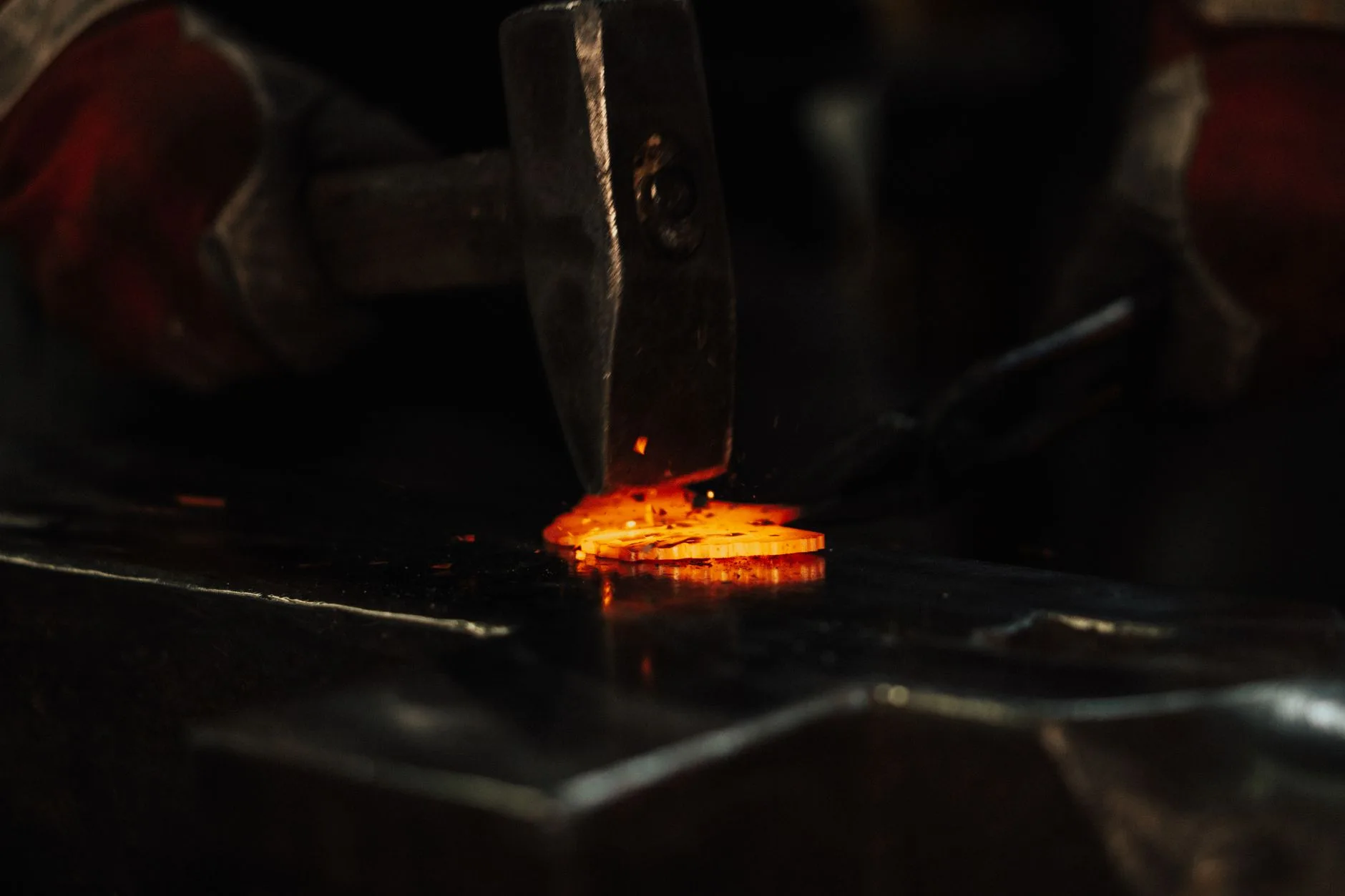
A traditional one-piece forged head starts as a solid billet of metal, commonly a relatively soft carbon steel. The billet is heated and pressed or hammered into shape through one or more dies. It is then trimmed, machined, ground, polished and finished to achieve the final head dimensions.
Mizuno’s official explanation of its forging process shows why “forged” is a manufacturing description, not a complete performance specification. Its process uses several forming stages before the head reaches final finishing. Other manufacturers may use different alloys, temperatures, dies and finishing methods, so two forged irons need not feel or perform alike.
Forging is well suited to relatively simple, precise head shapes. It has traditionally been associated with compact players’ irons, but the process can also produce larger cavity-back heads. Some forged heads are made from several pieces rather than one, and a forged face may be joined to a separately produced body.
How a cast iron is made
Casting begins with molten metal, usually a stainless-steel alloy, poured or injected into a mould. Once the metal cools and solidifies, the rough head is removed, cleaned, machined and finished. The mould can incorporate intricate cavities, channels and weight-saving areas that would be difficult or expensive to create through conventional one-piece forging.
That design freedom helps explain why casting is common in game-improvement irons. Engineers can move mass low, deep or towards the perimeter, add undercuts and create space for inserts or dense weighting. Casting is also efficient for producing complex shapes consistently at scale.
The manufacturing distinction should not be confused with the head categories explained in our guide to blade, cavity-back and game-improvement irons. “Forged” and “cast” describe how parts are formed; “blade”, “cavity-back” and “game improvement” describe the architecture and playing characteristics of the head.
Forged vs Cast Irons: Feel and Sound
Why forged irons have a softer reputation
Golfers often describe forged irons as soft, dense or muted at impact. That reputation has some basis: many one-piece forged heads use softer carbon steel, have compact shapes and contain fewer separate parts. A centred strike on that type of head can produce a short, solid impact sensation.
However, the word “forged” does not cause that sensation. Feel is the golfer’s interpretation of vibration and sound. Face thickness, cavity geometry, internal dampening, the ball, shaft, grip and strike location all influence what reaches your hands and ears. A thin, springy forged face attached to a hollow body can feel very different from a solid one-piece forging.
Our assessment treats feel claims as a combination of material, structure, acoustics and strike quality rather than evidence that one production route is automatically superior. That is the fairest way to compare current irons, where badges often simplify a much more complicated construction.
Cast irons can feel excellent
Modern cast heads can use carefully positioned ribs, badges, polymers and other dampening materials to tune vibration. A well-designed cast iron struck from the centre can feel more satisfying than a forged iron struck low on the face or towards the toe. The difference between two complete designs is usually more useful than the difference between their manufacturing labels.
If impact sensation matters to you, hit both sets with the same model of ball and, ideally, the same shaft family. Indoor range balls and hard hitting mats can alter sound and feel, so avoid making an expensive decision from a few hurried swings if an outdoor fitting is available.
Feedback is also personal. A skilled player may value a clear distinction between centred and off-centre contact. Another golfer may prefer a quieter, damped sensation that makes mishits less harsh. Neither preference is a measure of ability or quality.
Forgiveness, Shaping and Head Design
Casting allows more geometric freedom
Because molten metal flows into a mould, casting can reproduce complicated internal and external shapes efficiently. Designers can create deep cavities, wide soles, thin areas and weight ports while limiting the amount of expensive post-production machining. These features can increase stability and help launch the ball.
That does not mean every cast iron is forgiving. A cast head can still be compact, have a narrow sole and put relatively little mass around the perimeter. Equally, forging technology and subsequent machining now allow manufacturers to create forgiving forged cavity-backs.
Forgiveness mainly comes from the finished design:
- Head size and blade length
- Centre-of-gravity location
- Perimeter weighting and moment of inertia
- Face thickness and flexibility
- Sole width, bounce and turf interaction
- Loft, shaft length and overall build
These characteristics matter more to your results than whether the head began as a billet or molten metal. Our best golf irons guide groups options by golfer need because a model’s complete performance package is more informative than a forged or cast badge.
Forging is not the same as a blade
A common shortcut is that forged means blade and cast means cavity-back. Traditional manufacturing and market positioning often followed that pattern, but it no longer describes the market accurately.
You can buy forged cavity-backs with moderate sole widths, meaningful perimeter weighting and useful ball-speed protection. You can also find compact cast irons intended for accomplished ball-strikers. Look at the topline, offset, blade length, sole and cavity rather than guessing from the production method.
The best choice should also suit how the club moves through turf. A golfer with a steep delivery may prefer a different sole geometry from a shallow sweeper even if both produce similar launch-monitor numbers from a mat. Head construction alone cannot answer that question.
Consistency, Durability and Wear
Both processes can produce consistent heads
Modern quality control makes both forging and casting capable of producing precise, repeatable components. Reputable manufacturers check head weight, loft, lie, face geometry and cosmetic finish. Small tolerances still exist, which is why a final specification check can be worthwhile, but it is misleading to say all forged heads are inherently more consistent.
A forged head goes through forming and finishing operations that require control. A cast head depends on mould accuracy, alloy handling and subsequent machining. In either case, the quality of the tooling, production controls and final inspection matters more than a simple process label.
The R&A Rules of Equipment regulate the finished club’s design and performance characteristics; they do not award a performance advantage to a particular manufacturing route. For the buyer, conformity, build quality and suitable specifications are the relevant outcomes.
Which type lasts longer?
Both should last for many seasons if kept clean and dry. Stainless steels commonly used in cast heads tend to resist rust and everyday bag wear well. Softer carbon steels used in many forged heads may show chatter marks, small dings and finish wear sooner. That is usually cosmetic rather than structural.
Forged irons are not fragile in normal play, but neglect can mark them. After wet rounds, dry the heads before storing the bag. Clean soil from the grooves with a soft brush and avoid leaving damp clubs in a car boot. Our guide on how to choose golf clubs also explains why condition and suitability should outweigh cosmetic prestige when buying.
Groove and face wear depends heavily on how often you practise, the type of range surface and whether abrasive dirt remains between ball and face. A golfer hitting thousands of sandy range balls can wear any iron faster than someone playing once a fortnight on softer ground.
Loft, Lie and Custom-Fitting Considerations
Forged heads are often easier to adjust
Many forged carbon-steel heads can be bent for loft and lie more readily than harder stainless-steel castings. That can be useful for a golfer whose posture, delivery or gapping requires specifications away from standard. It can also help when checking and restoring specifications after extended use.
But “cast cannot be bent” is too broad. Some cast alloys and hosel designs allow modest adjustment, while other heads have tight manufacturer limits. Hollow or multi-piece constructions may need particular care. Always use the model-specific guidance and an experienced club technician; forcing a head can damage the hosel, finish or internal structure.
Fit the complete club, not just the head
Our fitting priority is the repeatable outcome: strike pattern, launch, spin, peak height, descent angle, carry gaps and left-to-right dispersion. We then consider turf interaction and the golfer’s response to the club’s look and feel. The manufacturing badge comes after those factors.
The shaft also changes delivery and sensation. Our guide to golf shaft flex explains why the label on a shaft is only a starting point. Weight, profile and length can be as important as nominal flex.
A proper fitting should check:
- Head model and set composition
- Shaft weight, profile, flex and length
- Loft and lie specifications
- Grip size and total club weight
- Carry distance and gap consistency
- Dispersion across several representative strikes
If you are deciding whether the service is justified, see our guide to custom-fitting golf clubs. Forged heads can offer more adjustment flexibility, but a cast head available in the correct specification from the factory may be the better fit from the outset.
Price and Value in the UK
Why forged irons often cost more
Forging can involve costly dies, several forming stages, substantial finishing work and tighter-volume production. Many forged models also sit in premium ranges with high-grade shafts, refined finishes and more hand finishing. Those factors contribute to the price; the word on the badge is not the only cost.
Cast heads are efficient to manufacture in complex shapes and large quantities. That helps brands offer capable game-improvement sets at lower prices. Yet cast does not automatically mean cheap: premium cast models can use expensive materials, tungsten weighting, elaborate face structures and extensive machining.
UK set prices change frequently and depend on the number of clubs, shaft choice and custom options. Compare like with like. A six-club set with stock steel shafts is not directly comparable with a seven-club custom build using premium graphite.
When is forging worth paying for?
The extra cost can make sense when you genuinely prefer the feel and shaping, need the adjustment characteristics, and produce consistent enough contact to appreciate the differences. It may also be worthwhile if a forged model delivers the best measured combination of dispersion, distance control and turf interaction in a fitting.
It is poor value when the decision is based mainly on status or an assumption that forged automatically means better. A well-fitted cast set that protects ball speed on your common miss is a stronger purchase than a beautiful forged set that makes your usual round harder.
Budget for the complete setup, not merely the heads. A suitable shaft, correct length and lie, usable set composition and perhaps a fitting session can improve value more than moving from one manufacturing process to another.
Why Modern Irons Blur the Forged-Cast Divide
Multi-piece heads change the question
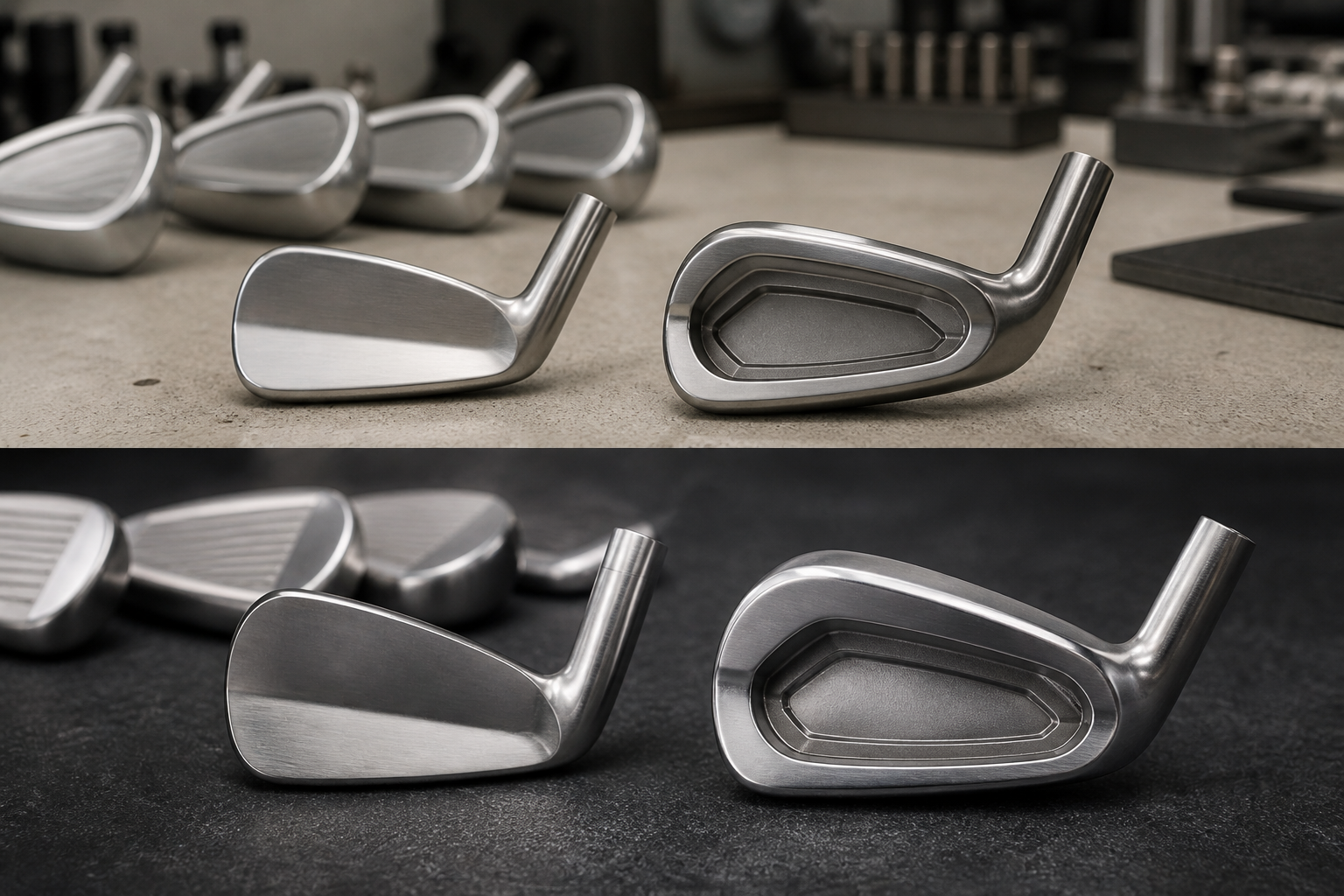
Many current irons are not purely one-piece forged or purely cast. A manufacturer may forge the face, cast the body, add a dense tungsten weight and inject a dampening material into an internal cavity. Another model may forge the main body but weld in a separately made face.
These combinations let designers pursue several aims at once: compact appearance, flexible face performance, precise centre-of-gravity placement and controlled sound. They also make a one-word label less useful. “Forged face” does not mean the entire head is forged, while “forged body” tells you little about the face construction.
When comparing a mixed head, ask:
- Which component is forged or cast?
- Is the head solid, hollow or cavity-backed?
- Where is additional weighting positioned?
- What are the lofts and shaft lengths?
- How does the model perform on your typical miss?
Marketing language may emphasise the premium-sounding part of the construction. The specification sheet and an independent fitting provide the fuller picture.
Performance categories overlap
The market now includes players’ distance irons that look compact but use hollow bodies and flexible faces, forgiving forged cavity-backs, and cast heads with refined acoustics. These products sit between the old categories rather than inside a clean forged-versus-cast split.
That is useful for golfers. You no longer have to choose between attractive shaping and meaningful help on imperfect strikes. The trade-off is that shopping requires more attention to the complete design.
Which Type of Iron Should You Choose?
Choose forged irons if…
Forged irons deserve a place on your shortlist if you value compact shaping and distinct impact feedback, prefer a model made from a softer material, or expect to need loft and lie adjustments within the manufacturer’s limits. They suit golfers who find a particular forged design controls carry and dispersion well—not merely low-handicap players.
Consider forged when:
- You consistently strike a relatively small area of the face
- Feel and sound are important to your confidence
- You prefer less offset or a thinner topline
- A fitting identifies a forged model as the best performer
- You may require future loft or lie adjustments
Do not assume every forged model will be demanding. Judge its head size, sole, cavity and measured performance.
Choose cast irons if…
Cast irons are often the practical choice when you want maximum design-led forgiveness, durable finishes and a more accessible price. They can suit beginners, improving golfers and experienced players who prioritise stability over traditional construction.
Consider cast when:
- Your strike moves around the face and you benefit from perimeter weighting
- You prefer a larger head, wider sole or more offset
- Value matters more than a traditional one-piece build
- You want strong resistance to everyday cosmetic wear
- A cast model produces the tightest real-world dispersion
The decisive test is not whether your handicap “qualifies” you for forging. It is whether the club delivers repeatable shots and useful misses from the lies you encounter.
Let the fitting settle close decisions
If two sets appear suitable, test them with the same ball and compare averages rather than the single longest shot. Look at front-to-back dispersion as well as left-to-right spread. An iron that occasionally produces an impressive number but creates unpredictable flyers may be less useful than a slightly shorter, more consistent option.
Include poor strikes in the assessment because they represent part of your game. Also note where those misses occur. A design that helps a low-face miss may not be best for a player whose common strike is towards the toe.
The Bottom Line
Forged irons are not automatically better, and cast irons are not automatically more forgiving. Forging often supports softer materials, compact shaping and easier specification adjustments. Casting often enables more intricate geometry, durable alloys and competitive pricing. The finished head design determines how those possibilities are used.
For most golfers, the right order is simple: choose the performance category, test the complete club, check the fit, then use construction and feel as tie-breakers. The biggest mistake is buying the manufacturing story instead of the ball flight.
Frequently Asked Questions
Are forged irons harder to hit than cast irons? Not necessarily. Difficulty depends on head size, centre of gravity, sole design, offset and perimeter weighting. A forged cavity-back can be easier to hit than a compact cast iron.
Do forged irons go farther? Forging itself does not create distance. Loft, face construction, shaft length, launch and strike quality drive distance. Compare carry and dispersion using equivalent specifications.
Do professional golfers only use forged irons? No. Tour players choose heads that produce the flight, control and turf interaction they need. Their sets may include forged, cast and multi-piece constructions.
Can cast irons be bent for loft and lie? Some can be adjusted modestly, but limits depend on the alloy and hosel design. Follow the manufacturer’s guidance and use an experienced club technician.
Do forged irons wear out faster? They do not normally lose performance quickly, but softer carbon-steel heads may show bag chatter, small marks and finish wear sooner than harder stainless-steel cast heads.
Is a forged face the same as a fully forged head? No. A forged face can be joined to a cast or separately made body. Check which components are forged and how the complete head is constructed.