The best golf caps UK players should buy in 2026 are the ones that stay put through a full round, manage sweat without feeling clammy, and suit the weather you play in most often. For most golfers, my pick is the Titleist Tour Performance Cap at about £23-£25 from Clubhouse Golf or American Golf. It is not the cheapest cap in the shop, but the fit, sweatband and brim shape make it the safest all-round buy for spring-to-autumn golf.
In This Article
- Best Overall: Titleist Tour Performance Cap
- How to Choose a Golf Cap for UK Conditions
- Best Budget, Mid-Range and Premium Golf Caps
- Caps, Bucket Hats and Visors: Which Style Suits You?
- Fit, Materials and Weather Details to Check
- Best Golf Caps UK: What I Would Buy for Different Golfers
- Frequently Asked Questions
Best Overall: Titleist Tour Performance Cap
The Titleist Tour Performance Cap is the one I would buy first because it does the boring jobs well. The crown has enough structure to keep its shape, the brim sits cleanly above sunglasses, and the adjustable back is easier to live with than a tight fitted cap if your head size sits between two sizes. Around £23-£25 is fair for a cap you can wear for most rounds rather than a logo purchase you regret after nine holes.
You can find it at Clubhouse Golf, American Golf and plenty of pro shops. Clubhouse Golf has had the Tour Performance colours around £22.99-£24.99 recently, while American Golf often lists Titleist caps around £25-£27 depending on colour and model. That is the sweet spot for best golf caps UK buyers because you are paying for fit and fabric rather than jumping into £40 fashion-headwear territory.
The main reason I rate it over cheaper caps is the sweatband. A bargain cotton cap feels fine on the putting green, then turns heavy and shiny across the front after a warm front nine. The Titleist fabric is lighter, dries faster, and does not collapse into your forehead when you take it off and stuff it in the bag. That matters if you already carry a towel, glove, spare balls and a small rain shell from a proper golf accessories checklist.
It is not perfect. If you burn easily on your ears or neck, a standard baseball cap is not enough on its own. The NHS sun safety guidance says sunscreen should be used with shade, suitable clothing and a hat, not instead of them. For summer medal rounds, I would still add SPF 30+, sunglasses and, on very exposed links courses, consider a brimmed bucket hat instead.
Quick Verdict
Buy the Titleist Tour Performance Cap if you want one cap for most rounds. Choose a waterproof bucket hat if you play through proper rain. Pick a cheap Inesis cap if you lose headwear every other month and just need something tidy for society golf.

How to Choose a Golf Cap for UK Conditions
Golf headwear looks simple until the weather changes twice before the 6th tee. A cap that works in May sunshine can be useless in sideways October rain, and a warm beanie that feels nice on the first tee can become sweaty once you are walking uphill with a trolley.
The first question is not brand. It is when you actually play.
If You Play Mostly in Spring and Summer
For April to September golf, choose a breathable cap with a proper sweatband and a brim that does not sit too low. White, light grey, stone and pale blue reflect heat better than black or navy. I like darker caps for style, but they are noticeably warmer when you are standing over a putt for longer than you should.
Look for:
- Light polyester or performance fabric: better than thick cotton when you sweat.
- Curved brim: gives glare control without fighting your sunglasses.
- Adjustable closure: useful if you wear it with sunglasses, a waterproof collar or winter layers.
- Low-to-mid crown: less movement during the swing than a tall trucker shape.
Cancer Research UK makes the same practical point golfers often ignore: sunscreen is not complete protection and should be paired with shade, clothing, a hat and UV-protective sunglasses. That lines up with real course life. A cap helps your eyes and forehead, but it will not protect your ears. If you regularly play midday tee times, pair your cap with the sort of lenses covered in our guide to choosing golf sunglasses.
If You Play Through Rain
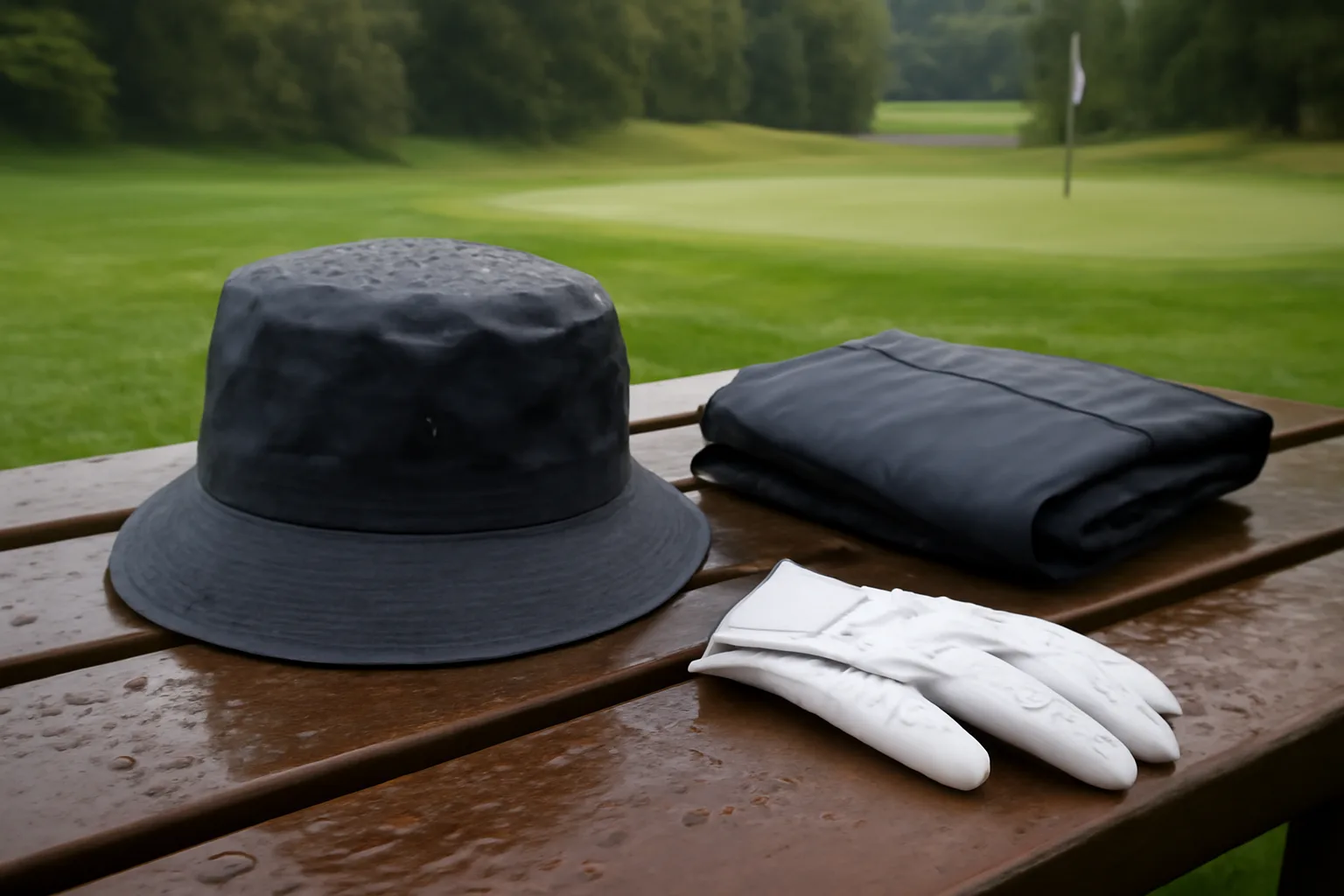
A normal golf cap is not a rain hat. It will keep drizzle out of your eyes for a few holes, then the brim darkens, the crown wets through, and you spend the back nine with cold water sitting against your head. For winter leagues and wet parkland golf, a waterproof bucket hat is much more useful.
The Decathlon Inesis RW500 waterproof golf hat is about £11.99 and is the value pick for wet rounds. It is not glamorous. That is fine. It gives more coverage than a baseball cap and costs less than a sleeve of premium balls. PING SensorDry waterproof bucket hats sit nearer £39.99 at Scottsdale Golf and feel more golf-specific, with better structure and a smarter finish. Galvin Green waterproof hats usually move into the £40-£55 bracket; I would only pay that if you already own decent golf waterproofs and play no matter what the forecast says.
If You Play Early Mornings or Winter Golf
Cold-weather headwear is a different purchase. A standard cap handles low winter sun, but it does nothing for your ears. For frosty starts, a thin beanie or thermal bobble hat at about £15-£25 makes more sense than trying to use one cap all year.
The mistake is buying a thick lifestyle beanie that pushes against your collar and moves during the swing. You want low bulk, enough stretch, and a fabric that dries quickly if you get caught in drizzle. A FootJoy or PING winter beanie around £18-£25 is a safer buy than a heavy fashion beanie from the high street.
Best Budget, Mid-Range and Premium Golf Caps
You do not need to spend much to get a useful golf cap. You do need to avoid the caps that look fine in a shop mirror but become annoying once you are walking, sweating and wearing sunglasses.
Best Budget: Inesis Adult Golf Cap MW500
The Inesis MW500 golf cap from Decathlon is the budget pick at about £4.99-£6.99 when available. It is the cap I would buy for a beginner, a junior who keeps leaving kit in the car, or anyone who wants a spare in the side pocket of the bag.
At this price, do not expect tour-level fabric or a premium closure. The win is value. It gives you a curved brim, light coverage and enough adjustment for normal casual golf. If you are putting together your first setup and still deciding what matters, spend the saved money on balls, tees and a glove from our best golf gloves guide.
The downside is long-round comfort. Cheap caps tend to mark up faster with sweat and sunscreen, and they rarely feel as stable in wind. Fine for the range. Fine for a nine-hole loop. Less convincing for a hot 36-hole day.
Best Mid-Range: Titleist Tour Performance Cap
The Titleist Tour Performance Cap remains the mid-range winner at about £23-£25. It looks like a golf cap without shouting, fits most head shapes, and works with both polos and waterproof jackets. The adjustable stretch clasp is easier to dial in than a snapback if you want a clean fit without the cap squeezing your temples.
This is the cap I would point most UK golfers towards if they want one reliable option and do not want to overthink it. It also makes sense as a gift because Titleist branding is safe. Some golf gifts are a bit risky; nobody wants a novelty headcover unless they chose it themselves. A good cap gets used.
Best Ball-Marker Cap: Titleist Players Performance Ball Marker Cap
The Titleist Players Performance Ball Marker Cap costs about £25-£27 and adds a magnetic marker to the brim. I like this more than I expected. It sounds like a gimmick until you stop digging around in your pocket with a tee, pitch mark repairer and two old 5p coins in there.
If you already use a separate marker clipped to your glove or pocket, skip it. If you like tidy kit and already keep your bag organised, it is a small upgrade that fits the way you play. It pairs naturally with the habits in our guide to organising your golf bag.
Best Waterproof Value: Inesis RW500 Waterproof Golf Hat
The Inesis RW500 waterproof golf hat is about £11.99 from Decathlon. For the money, it is hard to argue with. It is adjustable, gives more coverage than a cap, and solves the main wet-weather problem: water running off the brim and down your face while you are trying to hit a half-sensible 7-iron.
It is not the smartest hat in the clubhouse. I would not wear it for a sunny corporate day. But for winter roll-ups, wet practice rounds and anyone who walks rather than rides, it earns its place.
Best Premium Waterproof: PING SensorDry Waterproof Bucket Hat
The PING SensorDry Waterproof Bucket Hat is usually around £39.99. That is a proper spend for a hat, but it makes sense if you play through rain and want something less bargain-bin than the Decathlon option. The wider brim gives better ear and neck coverage, while the golf-specific cut is less floppy than many outdoor bucket hats.
This is also where fit matters. A loose bucket hat is miserable in wind. Try it with your waterproof jacket collar zipped up, because a brim that brushes the collar on every backswing will annoy you fast.
Best Premium Style Pick: G/FORE Relaxed Fit Hat
G/FORE caps sit closer to £40-£45, so I would not call them the sensible buy. They are the style pick. If you already own the practical basics and want something that looks sharper for resort golf, a G/FORE relaxed cap is a nice treat.
The trade-off is value. You are paying for styling and brand feel, not a huge leap in course performance. For most players, Titleist or PING is the better buy. For the golfer who already has everything and wants a smart gift, G/FORE makes more sense.
Caps, Bucket Hats and Visors: Which Style Suits You?
The headwear shape matters more than the logo. A baseball cap, bucket hat and visor solve different problems.
Baseball Caps
Baseball-style golf caps are the default for good reason. They are light, familiar and easy to wear with sunglasses. The brim reduces glare when you are tracking a ball, and the crown protects the scalp better than a visor.
Choose a cap if:
- You play mixed conditions: sunshine, light drizzle, breezy evenings.
- You want one everyday option: easy to keep in the bag and wear off the course.
- You use sunglasses: caps usually interfere less than wide-brim hats.
The weak point is side coverage. Your ears and neck remain exposed, so a cap is not a full sun-protection answer. For very bright days, a golf umbrella can help between shots; our best golf umbrellas guide covers the models that work in wind rather than turning inside out on the 12th.
Bucket Hats
Bucket hats are better for rain and stronger sun. They protect more of your face, ears and neck, and they make sense for links courses where the wind and sun can both be awkward in the same round.
The problem is movement. A floppy brim can distract you over the ball, and a hat that sits too low can affect your peripheral vision. If you wear glasses, check whether the brim touches the frames when you look down at address.
Visors
Visors are good for players who get too hot in a full cap but still want glare protection. They are common for summer golf, especially if you have thick hair and hate the trapped-heat feeling of a crown.
The obvious weakness is scalp protection. If you are thinning on top or play long summer rounds, a visor is not the smart choice unless you are disciplined with sunscreen. No judgement; most golfers are less disciplined with sunscreen than they think.
Beanies
Beanies are winter tools, not year-round golf headwear. A thin thermal beanie is useful for cold range sessions and early tee times, but it should come off once you warm up. If you keep sweating into a thick hat, you end up colder when the wind hits.
Fit, Materials and Weather Details to Check
The easiest way to spot a bad golf cap is to wear it while making three slow swings. If it shifts, presses your sunglasses into your head, or makes you aware of the brim, it will get worse on the course.
Closure and Size
Adjustable caps suit most golfers because they handle haircuts, sunglasses arms and small head-size changes through the day. Fitted caps look cleaner, but only when the size is right. Snapbacks are easy to adjust, though they can feel bulky under a waterproof hood.
For most adults, a one-size adjustable cap is fine. If you struggle with fit, look for:
- Stretch clasp: more comfortable than a hard plastic snapback.
- Velcro: simple, light and easy, though it can collect fluff.
- Fitted sizing: neatest look, least forgiving if you are between sizes.
Brim Shape
A curved brim is safest for golf because it blocks glare without feeling wide. Flat brims can work if you like the look, but they are not as useful when the sun is low. Wide brims give more protection but need a stable fit in wind.
If you use a rangefinder, make sure the brim does not sit so low that it hits the eyepiece. It sounds minor, but it is irritating if you are checking yardages several times a hole. The same applies if you are learning how slope and pin lock work in a golf rangefinder.
Fabric and Sweatband
Cotton feels nice at first but holds sweat. Polyester and performance blends dry faster and usually keep their shape better. Mesh panels help in summer but may let rain through. Waterproof fabric helps in rain but can feel warmer on mild days.
A good sweatband is worth paying for. It should sit flat, not scratch, and not leave a deep red mark across your forehead. If you wear sunscreen, expect pale caps to discolour eventually. That is normal. Wash gently by hand rather than throwing structured caps in a hot machine.
Colour Choice
White and light grey are best for hot days, but they show marks. Navy and black look cleaner for longer, yet they feel warmer. Green, stone and pale blue are good compromises. Bright colours are fine if you like them; just remember they are harder to pair with waterproofs and club clothing.
My boring advice: buy one light cap for summer and one darker or waterproof hat for poor weather. Trying to make one cap cover every round is why half the hats in golf bags look tired by August.
Best Golf Caps UK: What I Would Buy for Different Golfers
If I were buying one cap for myself, I would choose the Titleist Tour Performance Cap in navy or white, depending on what was in stock around £23-£25. It fits the widest range of golfers and does not feel like wasted money.
For a new golfer, I would buy the Inesis MW500 cap from Decathlon for about £5-£7 and spend the difference on lessons or range balls. Beginners already have enough kit decisions. A cheap cap is fine until you know how often you play.
For a wet-weather regular, I would buy the PING SensorDry bucket hat at about £39.99 if the fit is right. If that feels too much, the Inesis RW500 waterproof hat at £11.99 is the sensible backup. I would rather own a cheap waterproof hat that lives in the bag than a premium cap that gets soaked and loses its shape.
For a golfer who sweats a lot, I would avoid thick cotton and fashion caps. Pick a light performance cap from Titleist, PING, Callaway or Under Armour in the £20-£30 range. Mesh can help, but only if you are not using it as your rain hat.
For someone who wants a gift, Titleist is safest, PING is practical, and G/FORE is the more stylish punt. Stay away from novelty caps unless the golfer already wears loud gear. Golfers can be strangely fussy about headwear. Ask me how I know.
The bottom line: the best golf caps UK golfers can buy are not the loudest or most tour-branded. They fit cleanly, manage sweat, work with sunglasses, and match the weather you actually play in. For one-cap simplicity, buy the Titleist Tour Performance Cap. For rain, buy a waterproof bucket hat. For value, Decathlon’s Inesis range is better than its price suggests.
Frequently Asked Questions
What is the best golf cap for most UK golfers? The Titleist Tour Performance Cap is the safest all-round choice at about £23-£25. It fits well, handles sweat better than cheap cotton caps, and suits most spring-to-autumn rounds.
Are waterproof golf hats worth buying? Yes, if you play through rain rather than cancelling wet rounds. A waterproof bucket hat gives more coverage than a cap, with the Decathlon Inesis RW500 at about £11.99 and PING SensorDry around £39.99 as good UK options.
Is a golf cap enough sun protection? Not by itself. A cap helps with glare and scalp coverage, but your ears and neck still need protection. Use SPF 30+, sunglasses and shade when the UV is high.
Should I buy a visor or a cap for golf? Buy a cap if you want scalp coverage and all-round use. Buy a visor if you overheat in full caps and have enough hair coverage or are disciplined with sunscreen.
How much should I spend on a golf cap? About £20-£30 is the best range for most golfers. Under £10 is fine for a spare or beginner cap, while £40+ usually buys style, waterproofing or premium branding rather than a huge performance gain.
Can I wash a golf cap? Usually, yes, but hand washing is safer than machine washing. Use cool water, mild detergent and air dry it over a rounded shape so the crown and brim do not collapse.