Your eight-year-old has been whacking balls at the driving range with your old 7-iron — a club that’s taller than they are — and somehow they’re having the time of their life. Now they want their own clubs. The temptation is to grab whatever’s cheapest on Amazon, but buying the wrong set can kill their enthusiasm faster than a double bogey on a par 3.
Junior golf clubs are sized and weighted for smaller bodies, shorter swings, and developing technique. Give a child adult clubs and they will compensate with awkward grips, slow swings and poor posture. Give them properly fitted junior clubs and they can swing naturally from day one, which matters more than buying the biggest set in the shop.
Quick Answer
For most UK juniors, buy by height first and age second. Ages 3-5 usually need a 3-4 club starter set, ages 5-8 need 4-6 lightweight clubs, ages 8-10 can move to 6-8 clubs, and taller 10-13 year olds may need the largest junior sets or a basic fitting. US Kids Golf is the safest specialist choice, Callaway XJ is the easiest mainstream buy, and Wilson SGI Junior is the sensible budget option.
In This Article
- Why Junior Clubs Matter
- Choosing by Age and Height
- Best Junior Golf Club Sets: Our Picks
- How Many Clubs Does a Junior Need?
- Shafts, Grips and Clubhead Design
- Growing Out of Clubs: When to Upgrade
- Individual Clubs vs Boxed Sets
- Second-Hand Junior Clubs: Worth It?
- Getting Your Junior into Golf
- Where to Buy Junior Golf Clubs in the UK
- Frequently Asked Questions
Why Junior Clubs Matter
Adult clubs are designed for adult bodies — they’re heavier, longer, and have stiffer shafts. When a child swings an adult club, several things happen, all of them bad:
- They grip too far down the shaft to compensate for length, which changes the swing plane entirely
- The clubhead is too heavy, so they cast the club from the top instead of maintaining lag
- The lie angle is wrong, meaning the toe or heel digs into the ground at impact
- The grip is too thick, so their hands can’t control the club properly
Junior clubs solve all of these problems. They’re lighter, shorter, have more flexible shafts, and use thinner grips proportioned for small hands. The result is a child who can swing naturally and develop good technique from the start.
England Golf’s junior programme actively encourages proper equipment fitting for young golfers, and most PGA pros will tell you the same — the right equipment at the right age makes a measurable difference.
Choosing by Age and Height
Age is a rough guide, but height is what actually matters. A tall 7-year-old might need the same clubs as an average 9-year-old. Most manufacturers group their sets by height ranges:
Age 3-5 (Under 100cm)
These are essentially starter sticks — a driver, a mid-iron, a putter, and a bag. That’s all a small child needs. The focus at this age is fun, not technique. If they enjoy hitting the ball, you’ve won.
- Clubs needed: 3-4 maximum
- Typical set includes: Driver, 7-iron, putter, bag
- Budget: £30-60
Age 5-8 (100-120cm)
This is where most children start showing genuine interest. Sets expand to include a fairway wood and an additional iron. Shafts are still very flexible and clubheads are oversized for forgiveness.
- Clubs needed: 4-6
- Typical set includes: Driver, fairway wood, 7-iron, 9-iron, putter, bag
- Budget: £50-100
Age 8-10 (120-140cm)
Junior golf gets more serious at this age. Children playing regularly will benefit from a wider range of clubs, including wedges for short game work. Some talented juniors at this stage are already playing 9-hole competitions.
- Clubs needed: 6-8
- Typical set includes: Driver, fairway wood, hybrid, 7-iron, 9-iron, sand wedge, putter, bag
- Budget: £80-150
Age 10-13 (140-160cm)
The transition zone between junior and adult equipment. Taller children at the upper end of this range may be ready for cut-down adult clubs or the largest junior sets. This is also when a basic fitting starts making sense.
- Clubs needed: 7-9
- Typical set includes: Driver, 3-wood, hybrid, 7-iron, 9-iron, pitching wedge, sand wedge, putter, bag
- Budget: £100-250
Age 13+ (160cm+)
Most teenagers over 160cm can move into adult clubs, particularly ladies’ sets which have lighter shafts and more flexible flex profiles. Some manufacturers make “transition” sets specifically for this age group. For guidance on choosing adult clubs, our golf club selection guide covers the full decision process.
Best Junior Golf Club Sets: Our Picks
Best for Ages 3-5: US Kids Golf Ultralight
About £80-110 from American Golf or specialist retailers. US Kids Golf is the gold standard in junior equipment — their clubs are specifically engineered for each height bracket, not just scaled-down adult designs.
The Ultralight series uses ultra-lightweight shafts and heads that a 4-year-old can swing without effort. Available in 5 height categories from 39″ to 48″ (99cm to 122cm). Each set includes 3-4 clubs perfectly matched to the child’s size.
The 45″ set is the one to look at when a child has outgrown toy-style starter clubs but is still too small for mainstream junior sets. The key advantage is weight: it is light enough for a proper shoulder turn, so children can get the ball airborne rather than just pushing it along the ground. For a related angle, see our Best Ladies Golf Clubs 2026: Complete Sets guide.
Best for Ages 5-8: Callaway XJ-1
About £130-170 from American Golf, Scottsdale Golf, or Amazon UK. Callaway’s junior range brings proper brand engineering to kids’ clubs. The XJ-1 is designed for heights 100-120cm and includes a driver, fairway wood, 7-iron, sand wedge, putter, and stand bag.
The driver has an oversized head for maximum forgiveness, and the irons have wide soles that prevent digging. The stand bag is a nice touch — kids love carrying their own bag like the grown-ups.
Best for Ages 8-10: Ping Prodi G
About £200-300 from Ping stockists and golf retailers. Ping applies the same engineering philosophy to junior clubs as they do to adult equipment, and you can feel the quality immediately.
The Prodi G range comes in three height categories and each set includes a driver, fairway wood, hybrid, irons (7-9), a wedge, and a putter. The irons use the same perimeter weighting technology as Ping’s adult game improvement range. These are serious clubs for a serious young golfer.
Best Budget: Wilson SGI Junior
About £60-90 from American Golf, Decathlon, or Amazon UK. Wilson makes solid, no-frills junior sets that won’t break the bank. The SGI range covers ages 5-8 and 8-11 in separate packages.
Build quality isn’t in the same league as US Kids or Callaway, but for a child who’s just starting out and might lose interest after six months, Wilson is the smart financial choice. If they stick with it, upgrade later. Our Golf Accessories Checklist: What to Keep in Your Bag guide is useful alongside this.
Best for Ages 10-13: TaylorMade Rory Junior
About £150-250 from golf retailers. Named after Rory McIlroy (who started at age 2 — no pressure), the TaylorMade Rory range bridges the gap between junior and adult equipment.
The sets for older juniors include up to 8 clubs with a driver, fairway wood, rescue club, irons, wedge, and putter. The shafts are stiffer than younger junior clubs but still more flexible than adult regular flex. Good transition clubs for a child who’s outgrowing junior sets but isn’t ready for full adult weight.
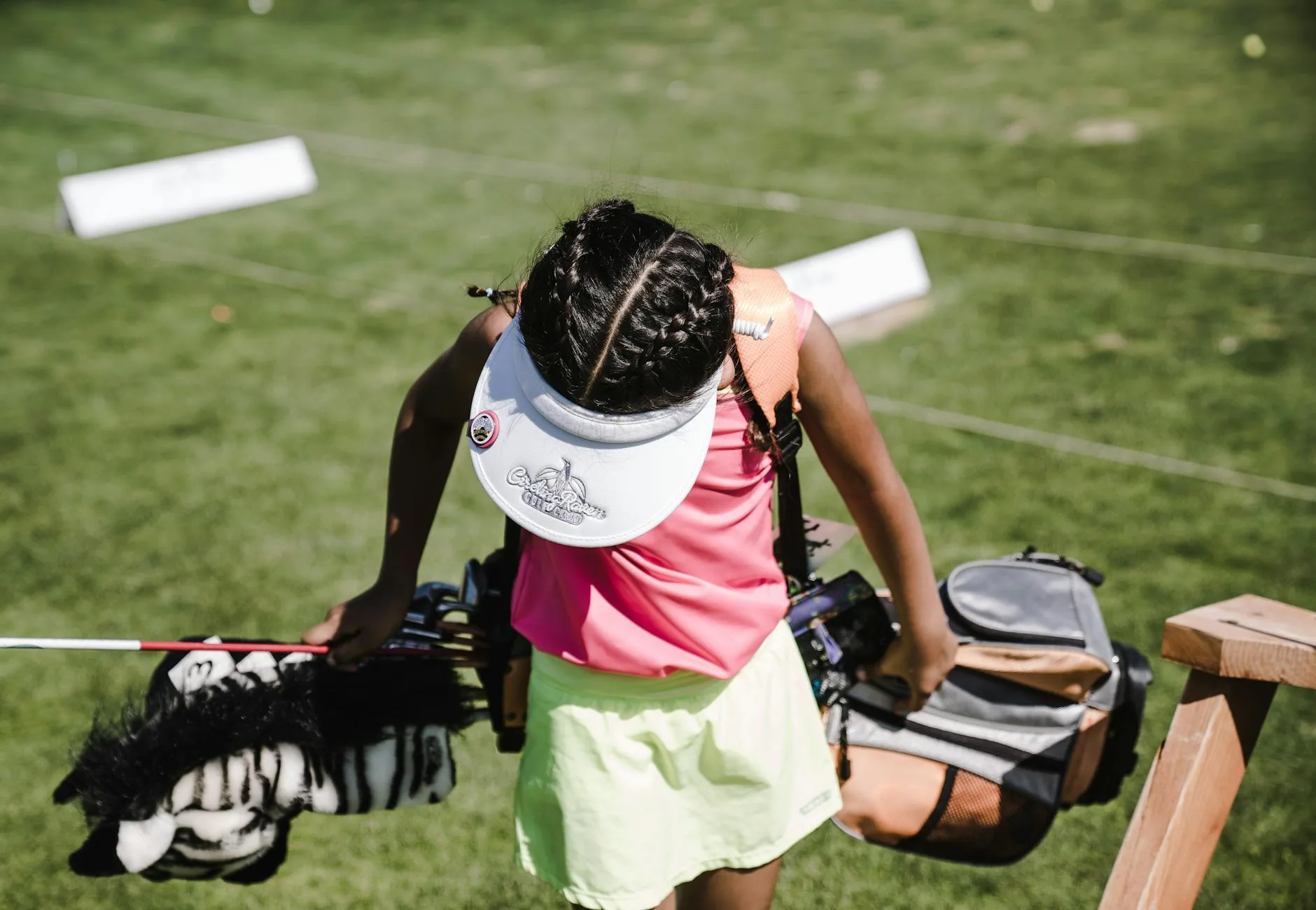
How Many Clubs Does a Junior Need?
The Honest Answer: Fewer Than You Think
A child aged 5-7 can play perfectly well with three clubs — a mid-iron, a wedge, and a putter. Adding clubs before they can consistently hit the ones they have just creates confusion.
Progressive Building
Start with 3-4 clubs and add as their game develops:
- Stage 1 (beginner): 7-iron, putter, and optionally a wedge
- Stage 2 (can get the ball airborne): Add a driver and a fairway wood
- Stage 3 (playing 9-hole rounds): Add more irons and a sand wedge
- Stage 4 (competing): Fill gaps with hybrids and specialty wedges
The R&A Rule
Juniors are subject to the same 14-club maximum as adults. But very few juniors under 12 need more than 8-9 clubs. More clubs doesn’t mean better golf — it just means more decisions for a developing brain to process.
Shafts, Grips and Clubhead Design
Shaft Weight and Flex
Junior shafts are lighter (40-60g vs 65-120g for adult shafts) and more flexible to match lower swing speeds. This helps children generate clubhead speed without straining. If a child can’t swing the club smoothly, the shaft is too heavy or stiff.
Grip Size
Junior grips are thinner than adult grips — typically undersize or junior size. A grip that’s too thick prevents proper wrist hinge and reduces clubface control. When buying used junior clubs, check the grips — they’re cheap to replace (about £3-5 per grip at a pro shop) and make a big difference. We cover a similar decision in Golf Shaft Flex Explained: Regular, Stiff & Senior.
Clubhead Design
- Drivers: Large, forgiving heads with high loft (14-16° vs 9-12° for adults). Higher loft helps children launch the ball
- Irons: Wide soles and cavity-back designs for maximum forgiveness. Junior irons should be easy to hit — workability is irrelevant at this stage
- Putters: Mallet-style with alignment aids. Blade putters require more skill to aim consistently — save those for later
Growing Out of Clubs: When to Upgrade
The Signs
- The club feels short — if the child has to bend noticeably to address the ball, they’ve outgrown the length
- They’re hitting it too far for the club — when a 7-iron goes 130 yards, they need stiffer shafts
- The grip feels tiny — if their hands wrap around with fingers overlapping, the grips are too small
- Growth spurts — children can grow 5-10cm in a year. Check club fit every 12 months
How Often to Replace
Expect to replace junior clubs every 2-3 years as the child grows. This is why the second-hand market is so active — children outgrow clubs long before they wear them out.
The Transition to Adult Clubs
Most children transition between ages 12-15, depending on height and strength. Signs they’re ready for adult clubs:
- Height over 155-160cm
- Can swing an adult club at reasonable speed
- Understands which clubs to use and why
- The largest junior set is clearly too small
For the full breakdown of adult club selection, our guide on getting started with golf covers what comes next.
Individual Clubs vs Boxed Sets
Boxed Sets: Best for Most Juniors
Pre-packaged sets are cheaper, properly matched for gapping, and include a bag. They’re the right choice for 90% of junior golfers. You know everything works together, and the manufacturer has done the fitting maths for you.
Individual Clubs: For Serious Young Golfers
Once a child is playing competitions and has a handicap, individual club selection starts making sense. A fitter can match shaft length, lie angle, and grip size to the child’s exact measurements. This costs more but produces noticeably better results.
Mixing and Matching
Some parents buy a boxed set and upgrade individual clubs as the child improves — typically starting with the putter (the most personal club) and the driver (the most exciting). This is a smart approach that balances cost with performance.
Second-Hand Junior Clubs: Worth It?
The Case For
Junior clubs get outgrown, not worn out. A set used for 18 months by a 7-year-old will be in perfectly good condition — children don’t generate the clubhead speed or play the volume of rounds needed to wear out a club.
Where to Buy Used
- Golf Bidder — the UK’s largest used club retailer, with a decent junior section
- Facebook Marketplace — parents selling outgrown sets at 40-60% of retail
- Pro shop notice boards — many clubs have a trade-in rack or member sales board
- eBay — wider selection but harder to verify condition
What to Check
- Grip condition — worn grips are cheap to replace but indicate heavy use
- Shaft straightness — sight down each shaft to check for bends. Children drop clubs frequently
- Clubhead damage — look for major dents or loose heads. Cosmetic scratches are fine
- Bag condition — zips, straps, and the stand mechanism are the first things to fail
Pricing Guide
- US Kids Golf sets: £40-70 used (from £80-130 new)
- Callaway/TaylorMade junior sets: £60-120 used (from £130-250 new)
- Wilson/unbranded sets: £20-40 used (from £50-90 new)
Getting Your Junior into Golf
Where to Start
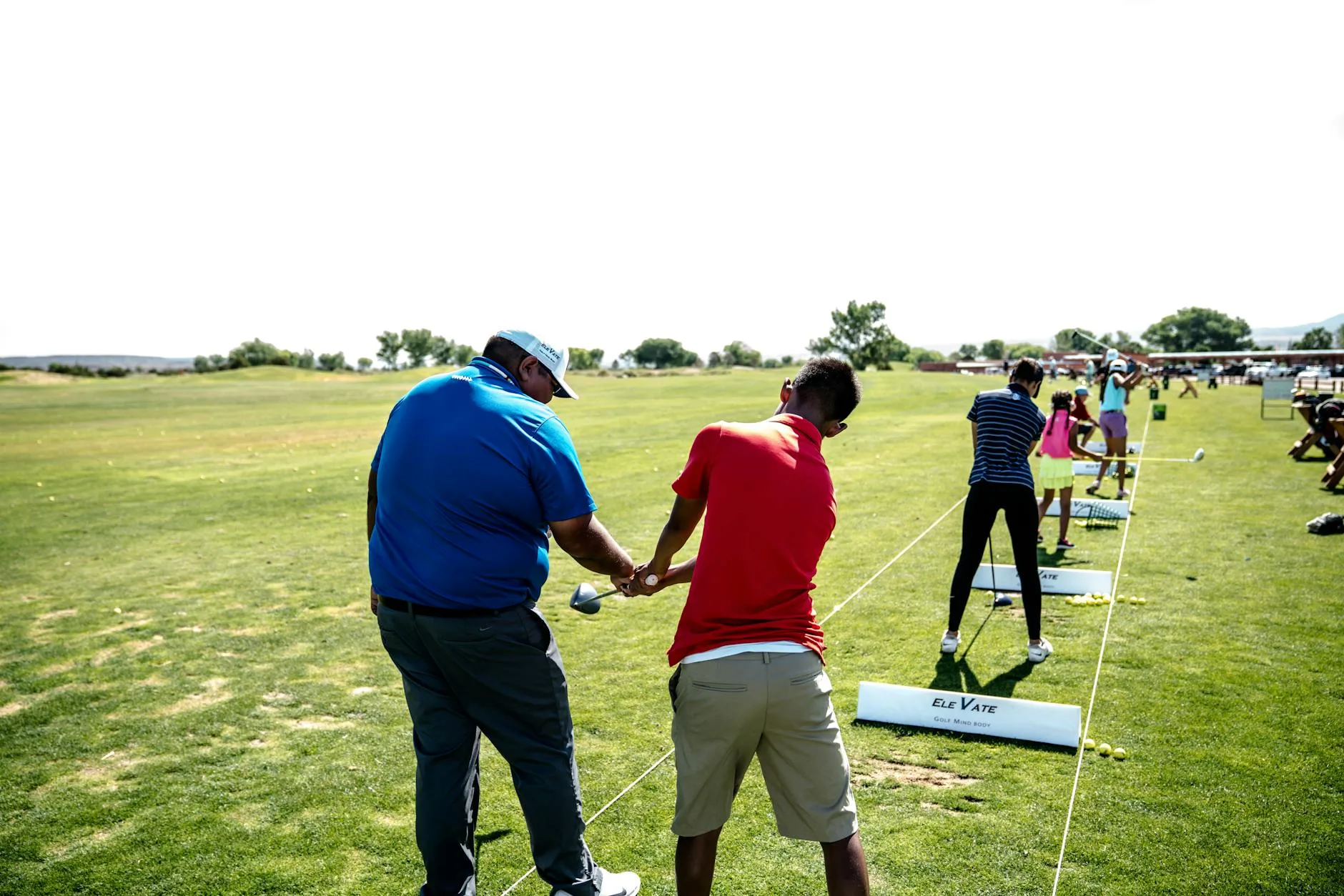
- Driving ranges — no commitment, no etiquette pressure, just hitting balls. Most ranges have junior rates
- Junior coaching — your local PGA pro almost always runs junior group sessions. These are social, fun, and affordable (about £10-15 per hour in a group)
- Pitch and putt courses — short courses designed for beginners and families. Perfect for first full rounds
- Junior memberships — many UK clubs offer junior memberships from £50-150 per year, which is remarkable value for unlimited access to a golf course
Making It Fun
The fastest way to kill a child’s interest in golf is to make it serious too early. At ages 5-8, the priority is enjoyment — playing games, hitting targets, and spending time outdoors. Formal coaching and competition can wait until they ask for it.
Equipment Doesn’t Replace Coaching
Even the best junior clubs won’t teach your child to swing. Six group lessons with a junior coach will do more for their game than upgrading from a £60 set to a £250 one. Invest in coaching first, equipment second.
Where to Buy Junior Golf Clubs in the UK
Specialist Golf Retailers
- American Golf — largest UK selection of junior clubs in-store and online. Staff can help with sizing
- Scottsdale Golf — good online selection with detailed specifications
- Golf Bidder — new and used junior clubs with a condition grading system
General Retailers
- Decathlon — budget junior sets from their Inesis brand. Decent starter equipment
- Amazon UK — wide range but quality varies wildly. Stick to known brands
- Sports Direct — occasionally stocks junior sets at discounted prices
Manufacturer Direct
- US Kids Golf (uskidsgolf.co.uk) — direct ordering with height-based sizing tool
- Ping — find a Ping stockist for Prodi G range fitting
- Callaway/TaylorMade — available through authorised retailers
Frequently Asked Questions
What age should a child start playing golf? Children can start hitting balls as young as 3-4, but structured play typically begins around age 5-7. There’s no rush — starting later doesn’t disadvantage a child. The most important thing is that they enjoy it, not that they start early.
Should I buy junior golf clubs or cut down adult clubs? Buy proper junior clubs. Cut-down adult clubs have the wrong weight, shaft flex, lie angle, and grip size. They create bad habits and make the game harder than it needs to be. Junior clubs are purpose-built for smaller bodies.
How much should I spend on junior golf clubs? For a beginner, £50-100 gets a perfectly adequate starter set from Wilson or Callaway. Spend more (£150-300) only if the child is committed, playing regularly, and showing genuine improvement. Don’t over-invest until you know they’ll stick with it.
Can girls use boys’ junior golf clubs? Yes. At junior ages, there’s no meaningful difference between boys’ and girls’ clubs — the sizing is based on height, not gender. Some brands offer colour variations marketed at girls, but the clubs themselves are identical in specification.
When should a junior get custom fitted? Custom fitting makes sense once a child is playing regularly (at least once a week), has a consistent swing, and is competing or has a handicap. For most juniors, that’s around age 10-13. Before that, height-based standard sets are fine.